Spa Heater Not Heating: 7 Proven Fixes That Work

- A spa heater not heating is almost always caused by one of seven fixable faults — the heater element itself is rarely the first thing to fail.
- Start with the filter, flow switch, and temperature sensor before touching the heater element or control board.
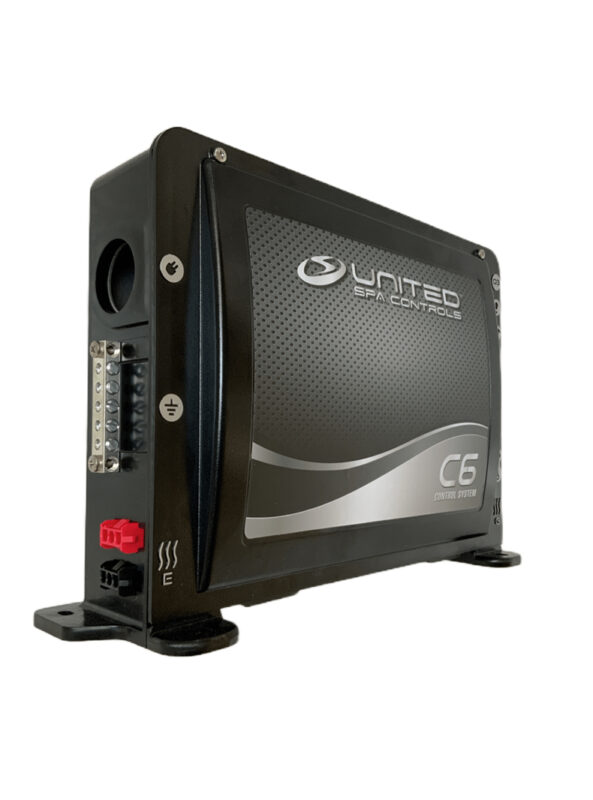
- Most heating failures on United Spa Controls C6, CB117P, and CR117S systems resolve without any part replacement.
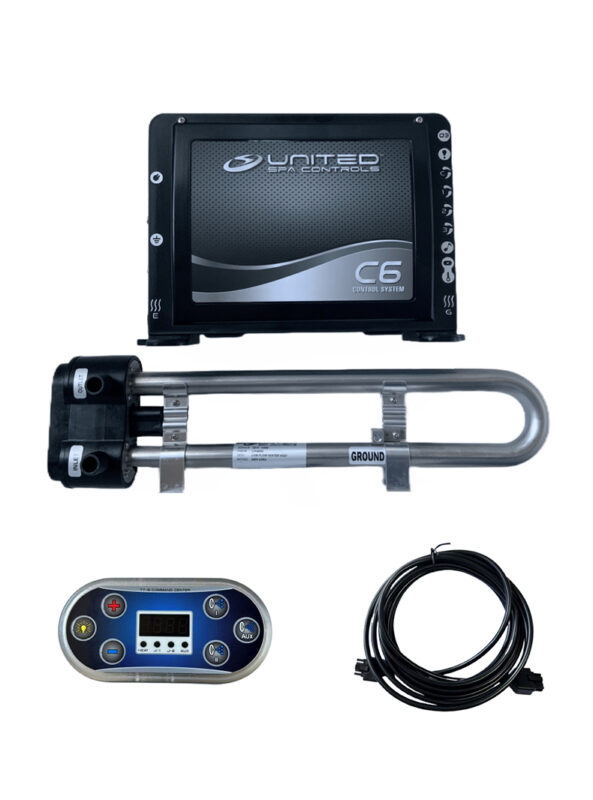
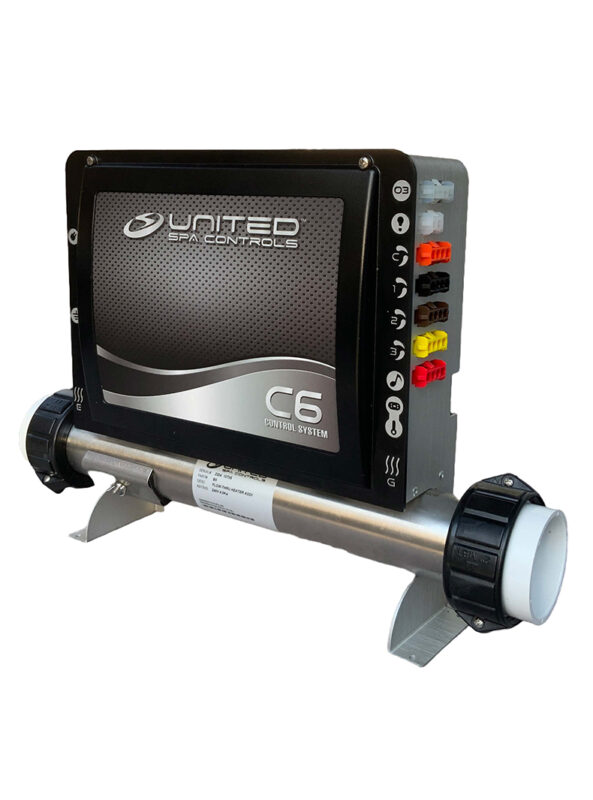
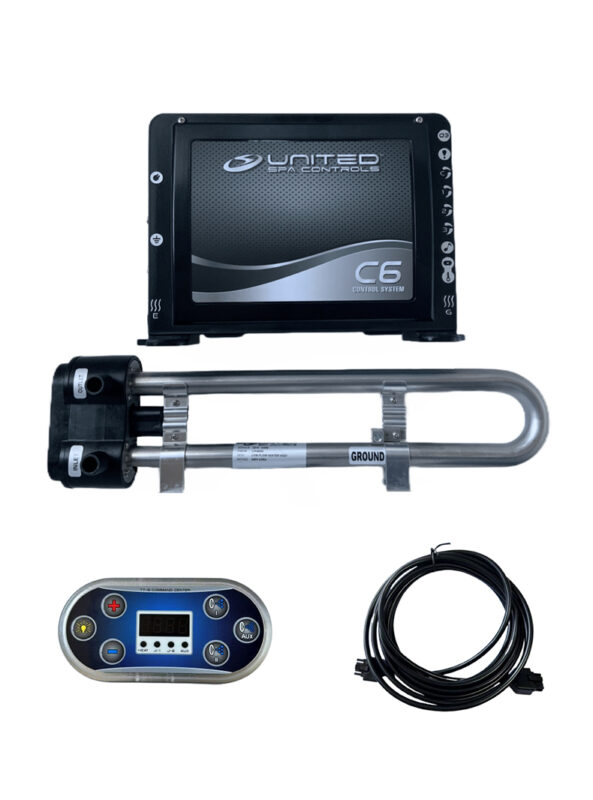
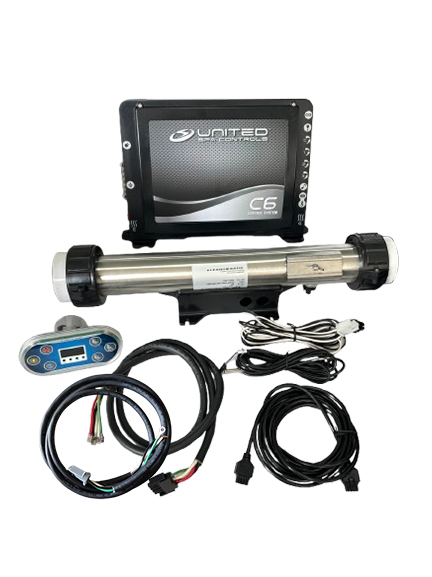
- If the heater element has failed, the CB117P complete system is the most cost-effective replacement for bottom-mount heater configurations.
- Work through the fixes in order — each step rules out the most common cause before moving to the next.
A spa heater not heating is one of the most common calls spa owners make — and one of the most frequently misdiagnosed. The assumption is usually that the heater element has burned out and needs replacement. In reality, a failed element is just one of seven possible causes, and it sits near the bottom of the list in terms of how often it is actually responsible.
This guide works through all seven causes of a spa heater not heating, in order from most to least common. Following the sequence prevents the most expensive mistake in spa troubleshooting: replacing the heater element — or the entire control system — when a blocked filter or a failed temperature sensor was the actual fault.
Before starting any electrical diagnosis on a spa heater not heating, disconnect power at the breaker. Refer to the Electrical Safety Foundation International for general electrical safety guidance before working on any spa system.
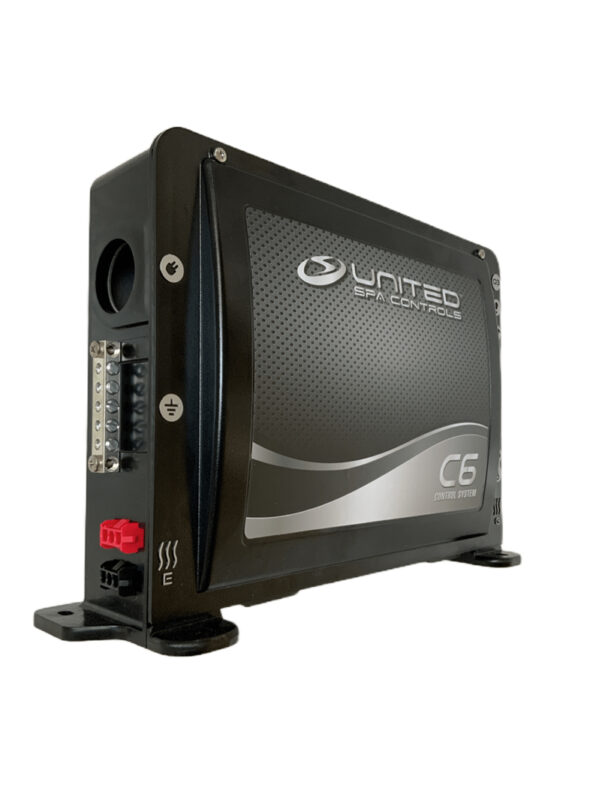
This guide covers United Spa Controls C6, CB117P, and CR117S systems. For a complete overview of these systems, see the United Spa Controls Brand Overview.
Why Is My Spa Heater Not Heating? The 7 Causes
A spa heater not heating can trace back to any point in the heating circuit — from the water flow side all the way to the control board. The seven causes below cover the complete fault chain, ordered by frequency of occurrence. Understanding each cause is the key to diagnosing a spa heater not heating without replacing the wrong part.
Cause 1: Blocked Filter Restricting Flow
A clogged filter reduces water flow through the heater below the minimum threshold required for the pressure switch to close. When the pressure switch is open, the control box does not permit the heater to activate — regardless of how cold the water is. The heater is not failing; the control box is correctly protecting it from running without adequate flow.
Fix: Remove the filter cartridge and test the spa without it temporarily. If the heater activates with the filter removed, the filter is the cause. Clean or replace the cartridge. See our detailed guide on spa low flow heater errors for the full flow diagnosis sequence.
Cause 2: Flow Switch or Pressure Switch Failure
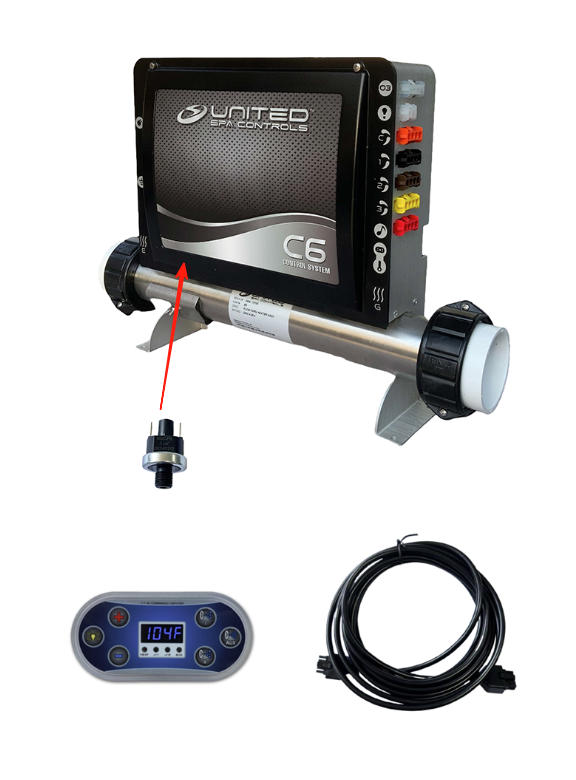
Even with a clean filter and good pump output, a failed pressure switch can prevent the heater from activating. A switch stuck in the open position signals “no flow” to the control box regardless of actual flow conditions. The spa displays a FLO, FL, or DR error code.
Fix: Test the pressure switch with a multimeter. Disconnect the switch leads and measure continuity across the terminals with the pump running — the switch should close (show continuity) under flow. An open reading with the pump running confirms switch failure. Replace the switch.
Cause 3: Failed Temperature Sensor
A temperature sensor that has drifted high — reading a higher temperature than actual — causes the control box to believe the set point has already been reached. The heater will not activate because, from the control box’s perspective, heating is not needed.
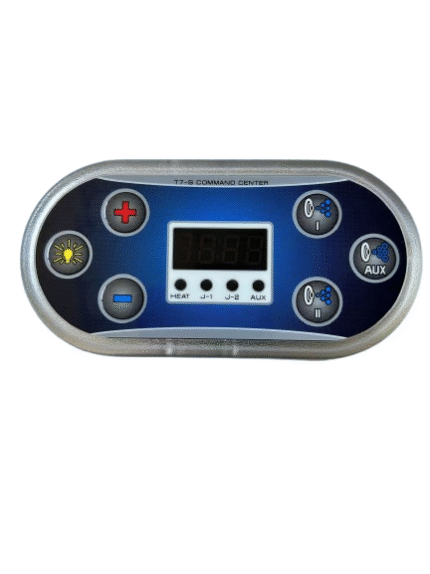
Fix: Compare the displayed temperature on the T7S topside panel against an independent thermometer reading. A consistent discrepancy of more than 3–4°F indicates a sensor fault. Test the sensor resistance with a multimeter — at room temperature it should read approximately 10k ohms. See our full United Spa Controls temperature sensor guide for step-by-step testing.
Cause 4: Incorrect Temperature Set Point
This is the simplest cause and is worth checking first before any diagnostics. If the set point on the T7S topside panel is at or below the current water temperature, the heater will not activate — it is working exactly as intended.
Fix: Press the temperature up button on the T7S topside panel to raise the set point above the current water temperature. Confirm the heater indicator activates within 60 seconds. If it does, there was no fault — the set point was simply not above the water temperature.
Cause 5: Tripped High-Limit Sensor
The high-limit sensor is a safety device mounted on or near the heater assembly. If water temperature exceeds the safety threshold — or if the high-limit sensor has failed in the tripped position — the heater is locked out until the high-limit resets. Some high-limit sensors reset automatically when temperature drops; others have a manual reset button.
Fix: Locate the high-limit sensor on the heater assembly. If it has a manual reset button (a small red or black button on the sensor body), press it once firmly. If the sensor has failed and does not reset, it requires replacement. On CB117P systems, the high-limit sensor is part of the integrated heater assembly.
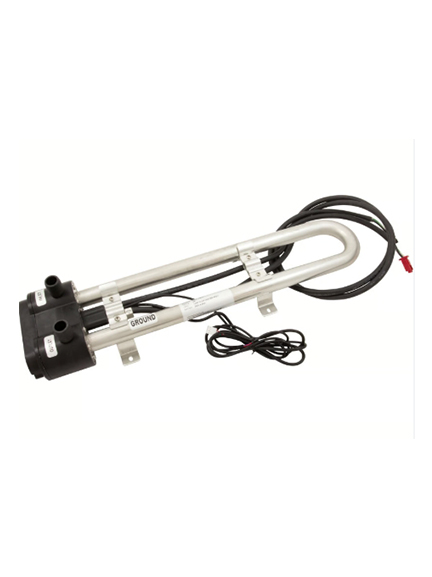
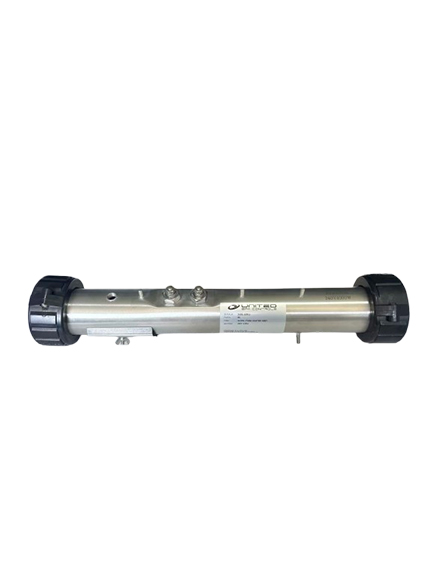
Cause 6: Failed Heater Element
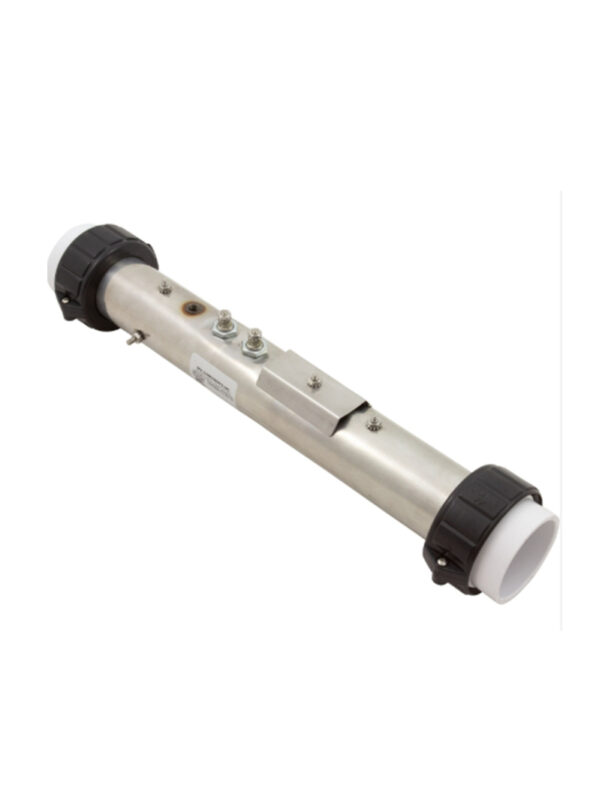
If the filter is clean, the pressure switch is functioning, the temperature sensor reads correctly, the set point is above water temperature, and the high-limit has not tripped — and the heater still does not activate — the heating element may have failed.
A failed element shows as either an open circuit (element burned out and broken) or a short circuit (element failed with an internal short, which will also trip the GFCI breaker).
Fix: With power disconnected, measure resistance across the heater element terminals. A functioning element reads a low resistance (typically 8–16 ohms depending on element wattage). An open circuit (OL) reading confirms the element has burned out. A GFCI trip every time power is restored alongside heating failure suggests a shorted element. See our guide on spa heater tripping GFCI for element testing procedure.
Cause 7: Failed Control Board
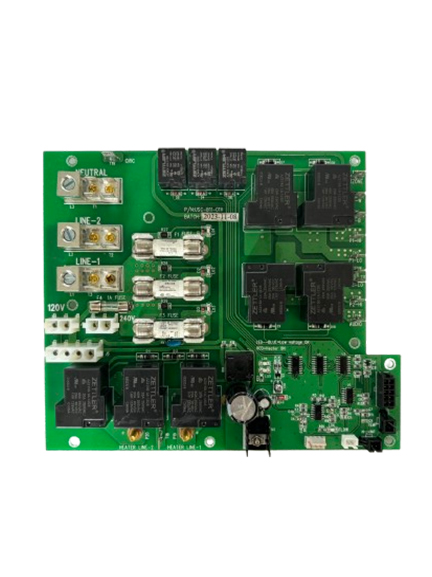
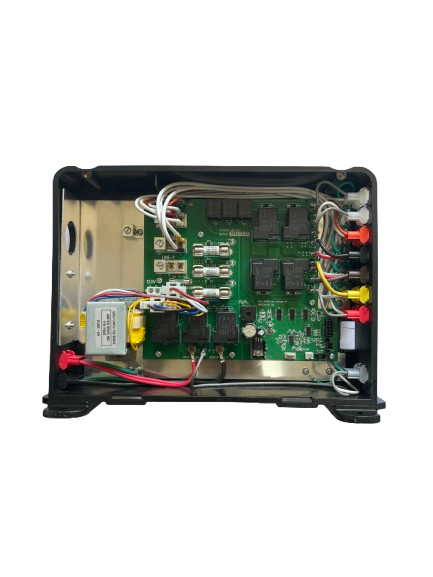
Control board failure is the least common cause of a spa heater not heating, but it does occur — particularly in systems more than 10 years old or in systems that have experienced repeated electrical faults. A failed control board may not send activation signals to the heater relay even when all other conditions are met.
Fix: Control board replacement is typically only appropriate after ruling out all other causes. On United Spa Controls systems, a failed control board in an aging system often makes a full system replacement with a new CB117P more cost-effective than board-level repair — the new system includes a replacement control board, heater, pressure switch, and topside panel.
Spa Heater Not Heating: Step-by-Step Fix Sequence
Work through these steps in order. The sequence is designed to rule out the most common and least expensive causes before moving to component replacement. This is the fastest reliable method to diagnose a spa heater not heating on United Spa Controls systems.
Step 1: Check the set point. Confirm the T7S display set point is above current water temperature. If not, raise the set point. Watch for the heater indicator to appear on the panel within 60 seconds.
Step 2: Check for error codes. If the T7S panel shows FLO, FL, DR, or OH, the heater is locked out by a fault condition. Treat the error code first before assuming heater failure. See the Spa Control System Error Codes guide for code-specific fixes.
Step 3: Clean or remove the filter. Remove the filter cartridge and run the spa without it briefly. If the heater activates without the filter, the filter was the cause. Clean or replace it.
Step 4: Test the pressure switch. With the pump running, measure continuity across the pressure switch terminals. It should close under flow. An open reading with the pump running confirms switch failure — replace the switch.
Step 5: Test the temperature sensor. Compare the displayed temperature against an independent reading. Test sensor resistance with a multimeter — should read approximately 10k ohms at room temperature. A significantly different reading confirms sensor failure.
Step 6: Reset the high-limit sensor. Locate and press the manual reset button on the high-limit sensor if present. If the high-limit has failed in the tripped position, replace it.
Step 7: Test the heater element. With power off, measure resistance across the heater element terminals. Open circuit (OL) confirms a burned-out element. Proceed to element or system replacement.
| Step | Check | If Fault Found | Cost |
|---|---|---|---|
| 1 | Set point | Raise set point | Free |
| 2 | Error codes | Address error code cause | Free–low |
| 3 | Filter | Clean or replace filter | Low |
| 4 | Pressure switch | Replace switch | Low |
| 5 | Temperature sensor | Replace sensor | Low |
| 6 | High-limit sensor | Reset or replace | Low–medium |
| 7 | Heater element / control board | Replace element or full system | Medium–high |
Spa Heater Not Heating vs. Heating Too Slowly: What Is the Difference?
Two distinct problems are sometimes confused: a spa heater not heating at all, and a spa heater that heats but very slowly. The causes and fixes differ significantly.
Spa heater not heating at all: The heater element is not energized. The control box is either not calling for heat (set point issue, sensor issue) or is actively blocking the heater (flow fault, high-limit trip). Work through the 7-step sequence above.
Heater heating too slowly: The heater element is energized and the system is operating correctly, but the heat-up rate is lower than expected. Common causes include a partially failed element (some of the resistance wire has burned out, reducing effective wattage), an undersized element for the spa volume, significant heat loss through poor insulation or a missing cover, or very cold ambient temperatures. If the heater is confirmed on but takes more than 2–3 hours to raise temperature by 10°F, test the element resistance — a partial failure will show a higher than normal resistance reading.
Spa Heater Not Heating After Control Box Replacement
A common scenario is a spa heater not heating specifically after a control box replacement — the old system was replaced, the new system powers on, but the heater does not activate. If your spa heater not heating issue started immediately after a replacement, this section covers the three most likely causes. This is almost always a configuration or wiring issue rather than a faulty new system.
Check 1: Heater Configuration Mismatch
The most common cause is a mismatch between the replacement control system and the spa’s heater plumbing. Installing a CB117P (bottom-mount heater) into a spa that has a remote heater configuration will result in FLO errors because the control box expects water to flow through the bottom-mount heater — which is not present. Confirm that the replacement system type matches the existing heater configuration. See the C6 vs CB117P comparison for configuration guidance.
Check 2: Wiring Errors
After any control box replacement, verify that the heater element leads are connected to the correct terminals on the new control board. On United Spa Controls systems, incorrect heater wiring can prevent the element from receiving voltage even when the control board is calling for heat. Refer to the wiring diagram in the installation documentation for the replacement system.
Check 3: Flow Fault From Air Lock
Any time the spa plumbing is disturbed during a control box replacement, air may be trapped in the heater circuit. This produces an immediate FLO error and prevents the heater from activating. Run the jets on high speed for 60 seconds to purge any trapped air before concluding there is a heater fault.
When to Replace the Entire United Spa Controls System
Individual component replacement — sensor, pressure switch, element — is cost-effective when the rest of the system is in good condition. Full system replacement makes more sense when:
- The control board shows visible damage (burn marks, corroded traces, swollen capacitors)
- Multiple components have failed or are aging simultaneously
- The system is more than 10–12 years old and has a history of recurring faults
- The heater element has failed and the control board is also suspected
- The cost of individual repairs approaches or exceeds the cost of a replacement system
The United Spa Controls CB117P complete system includes a new control board, integrated heater assembly, pressure switch, T7S topside panel, and all necessary cables. For most aging bottom-mount heater installations, the CB117P is the most cost-effective path back to reliable heating.
For remote heater installations, the United Spa Controls CR117S provides an equivalent complete replacement.
SpasRus stocks United Spa Controls temperature sensors, pressure switches, and complete CB117P and CR117S systems for fast worldwide dispatch.
Browse United Spa Controls Parts → Contact Us to Confirm Your Part
Frequently Asked Questions: Spa Heater Not Heating
My spa shows the correct temperature on the display but the water feels cold. What is wrong?
If the T7S display shows a temperature that feels inaccurate — the display reads 102°F but the water feels cold — the temperature sensor has likely drifted and is reading high. The control box believes the water is already at or above the set point, so the heater does not activate. Test the sensor with a multimeter (should read approximately 10k ohms at room temperature) and compare the display reading against an independent thermometer. A consistent discrepancy confirms sensor failure. Replacing the temperature sensor is the fix — not the heater itself.
The spa pumps are running but the heater is not activating. Where do I start?
Pumps running but heater not activating is the most common spa heater not heating presentation. Start by checking the T7S display for error codes — FLO, FL, or DR means the flow switch is preventing heater activation, and you should check the filter and pressure switch first. If there are no error codes and the set point is above water temperature, test the temperature sensor. If the sensor is normal, check the high-limit sensor for a trip. Only after ruling out these simpler causes should you test the heater element itself.
How do I know if my spa heater element has failed?
Test the element with a multimeter set to resistance (ohms). Disconnect power at the breaker and disconnect the heater element leads from the control board terminals. Measure resistance across the two element terminals — a functioning element reads 8–16 ohms (depending on element wattage). An open circuit reading (OL / infinite resistance) means the element has burned out and the wire inside has broken. A reading of 0 ohms (short circuit) means the element has internally shorted — this will also cause the GFCI breaker to trip every time power is restored. Either reading confirms element failure.
Can a spa heater not heating cause the water to go cold overnight?
Yes. A well-insulated hot tub typically loses 3–5°F overnight with the cover on. If the heater is not activating, the spa will cool toward ambient temperature over 12–24 hours depending on insulation quality and ambient temperature. If you find the spa unexpectedly cold in the morning, check whether the heater indicator is present on the T7S panel (indicating the control box is calling for heat) and work through the diagnosis sequence. A heater that worked the previous day but is not heating the following morning often indicates a flow fault or tripped high-limit rather than a failed element.
My spa heater works on high jets but not on low speed circulation. Why?
If the heater activates when the jets run at high speed but not during normal low-speed circulation, the flow through the heater is marginal — enough to close the pressure switch at high pump speed but not at low speed. The most common cause is a partially clogged filter restricting flow at low pump output. Clean or replace the filter. If the problem persists with a clean filter, the circulation pump may be running at reduced output due to wear or a partially blocked pump impeller — inspect the pump basket for debris and check that the impeller is clear.
Is it safe to run my spa without the heater working while I wait for parts?
It depends on the cause. If the heater is simply not activating due to a sensor or flow fault, running the spa with the pumps operating is generally safe — the water circulates and remains clean, just not heated. However, if the fault involves a shorted element that is tripping the GFCI breaker, do not attempt to run the spa until the element is replaced — a shorted element creates a ground fault in the water circuit. Similarly, if the control board is suspected, do not power the spa until the board is inspected. When in doubt, disconnect power and contact SpasRus for guidance before operating the spa.
Parts to Fix a Spa Heater Not Heating
SpasRus stocks the most commonly replaced parts for United Spa Controls heating systems: temperature sensors, pressure switches, high-limit sensors, and complete CB117P and CR117S replacement systems. All orders ship worldwide from our North American warehouse.
If you have completed the diagnosis sequence above and are unsure which part your system needs, contact us with your system model and the results of your tests — we can confirm the correct part before you order.
Browse all United Spa Controls systems and replacement parts at SpasRus.
For a complete guide to United Spa Controls system selection and compatibility, see the United Spa Controls Brand Overview.
SpasRus is a North American retailer specializing in United Spa Controls spa systems, heaters, topside panels, sensors, and compatible replacement parts for residential and light commercial hot tubs.