Gas Heater Spa Control: 5 Facts Before You Buy


- A gas heater spa control system manages water temperature, pump operation, and safety monitoring for hot tubs heated by a natural gas or propane heater rather than an electric element.
- United Spa Controls C6, CB117P, and CR117S systems are designed for electric heater configurations — they are not gas spa control systems.
- Most residential hot tubs sold in North America use electric heaters. Gas heaters are more common in swim spas, therapy pools, and commercial installations requiring fast heat-up times.
- If you have a gas-heated hot tub and need a control system, the control box must be matched to the gas heater brand and model — wiring and interlock requirements vary by manufacturer.
- For electric-heated spas, United Spa Controls systems are the cost-effective replacement standard — with the CB117P being the most commonly specified retrofit unit.
The term gas heater spa control refers to the combination of a hot tub control system and a gas-fired heating unit — typically natural gas or propane — used in place of the standard electric immersion heater found in most residential hot tubs. Understanding how gas heater spa control systems work, when they are the right choice, and how they differ from electric systems like the United Spa Controls range is essential before making any purchasing or replacement decision.
This guide covers how gas heater spa controls operate, the key differences from electric spa control systems, when gas heating makes sense for a spa installation, and what to consider when selecting a control system for either fuel type.
For a complete overview of United Spa Controls electric spa systems, see the United Spa Controls Brand Overview.
How a Gas Heater Spa Control System Works
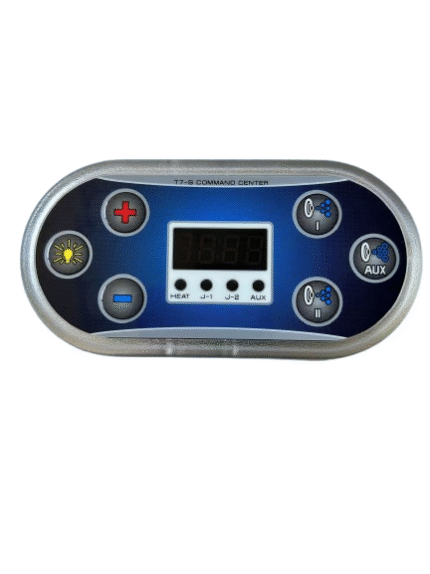
In a gas-heated spa, the control system performs the same core functions as an electric spa control — monitoring water temperature, operating the circulation pump, managing safety shutdowns, and displaying status on a topside panel. The difference is in how the heating circuit is controlled.
In an electric spa system, the control box directly switches 120V or 240V AC power to the heating element inside the heater assembly. The control box has direct electrical control over the heat source.
In a gas heater spa, the control box communicates with the gas heater through a low-voltage relay or digital interface. When the control box determines that heating is needed, it sends a signal to the gas heater’s ignition control board, which opens the gas valve and fires the burner. When the set temperature is reached, the signal is removed, the gas valve closes, and the burner shuts off.
Because gas heaters operate at much higher BTU outputs than electric elements, a gas-heated spa can reach temperature significantly faster — but the control interface requirements are different from electric systems.
Gas Heater Spa Control vs. Electric Spa Control: Key Differences
Before deciding between a gas heater spa control and an electric system, it is important to understand how they differ across the key decision factors.
| Factor | Gas Heater Spa Control | Electric Spa Control (United Spa Controls) |
|---|---|---|
| Heat source | Natural gas or propane burner | Electric immersion element (1.5–6 kW) |
| Heat-up speed | Fast — 100,000+ BTU typical | Slower — 5,000–20,000 BTU equivalent |
| Operating cost | Lower per BTU where gas is cheap | Depends on local electricity rates |
| Installation complexity | High — gas line, venting, permits required | Lower — dedicated 240V circuit sufficient |
| Maintenance | Annual gas appliance servicing required | Minimal — element replacement when needed |
| Common application | Swim spas, therapy pools, commercial | Residential hot tubs (most common) |
| Control interface | Low-voltage relay signal to gas valve | Direct line voltage to heating element |
| Safety requirements | Gas code compliance, CO detection, venting | GFCI protection, NEC compliance |
For the vast majority of residential hot tub owners, electric spa control systems are the correct replacement path. Gas heating is primarily appropriate for larger water volumes, commercial use, or specific site conditions where gas infrastructure already exists.
5 Things to Know Before Choosing a Gas Heater Spa Control
1. Most Residential Hot Tubs Use Electric Heaters — Not Gas
If you own a standard residential hot tub (under 500 gallons / 1,900 liters), it almost certainly uses an electric immersion heater. Gas heating in standard hot tubs is uncommon because the installation cost of running a gas line, installing a vented gas appliance, and meeting local gas code requirements is disproportionate for a small water volume that an electric element can maintain at temperature efficiently.
Before assuming your spa needs a gas heater spa control, confirm the existing heat source. Open the equipment bay and look for the heater assembly. An electric heater will have wiring terminals and a heating element. A gas heater will have a burner assembly, gas supply line, and flue venting. If you are unsure, contact SpasRus before ordering any control system.
2. Gas Heater Spa Controls Require Matched Components
Unlike electric spa control systems — where the United Spa Controls CB117P is a broad-fit replacement for most residential configurations — gas heater spa controls must be matched to the specific gas heater model. The interface between the control box and the gas heater ignition board varies by manufacturer, and using a mismatched control system can result in the gas heater failing to ignite or failing to shut off — both dangerous conditions.
Always identify the gas heater brand and model before selecting a replacement control system for a gas-heated spa installation.
3. Gas Heater Installation Requires Licensed Contractors
In most jurisdictions, connecting a gas appliance — including a gas spa heater — requires a licensed gas contractor and a permit. This applies to new installations and to any modification of existing gas connections. Installing a gas appliance without the proper permits and inspections can void homeowner insurance and create liability in the event of an incident.
This is in contrast to electric spa control replacement, which — while it should be performed by a qualified electrician — typically involves replacing components within an existing electrical circuit rather than extending gas infrastructure. Refer to the Electrical Safety Foundation International for general electrical safety guidance before working on any spa electrical system.
4. Swim Spas and Therapy Pools Are the Primary Gas Heater Application
Gas heating is most commonly appropriate for swim spas and large therapy pools — installations with 1,000+ gallons / 3,800+ liters of water where the recovery time of an electric element is impractical. A gas heater with 100,000–400,000 BTU output can bring a large swim spa from cold to temperature in a fraction of the time an electric element would require.
If you have a swim spa or therapy pool and are evaluating heating options, a gas heater paired with a compatible control system may provide better performance than electric heating — but requires the gas infrastructure and ongoing maintenance described above.
5. Converting from Gas to Electric (or Electric to Gas) Is a Major Project
Changing the heat source type — from gas to electric or vice versa — is not a simple control box replacement. It involves changes to the plumbing (heater assembly replacement), electrical or gas infrastructure, and in many cases the control system itself. The project cost and complexity typically exceeds a straightforward like-for-like replacement.
If your existing spa uses a gas heater and it has failed, replacing the gas heater with a matched unit is usually more practical than converting to electric. Conversely, if your electric spa control has failed, replacing it with a matched electric system is the standard approach.
United Spa Controls Systems and Gas Heater Compatibility
United Spa Controls C6, CB117P, and CR117S systems are designed for electric heater configurations. They are not gas spa control systems. Understanding what each system does — and does not — support is important before ordering.
United Spa Controls C6
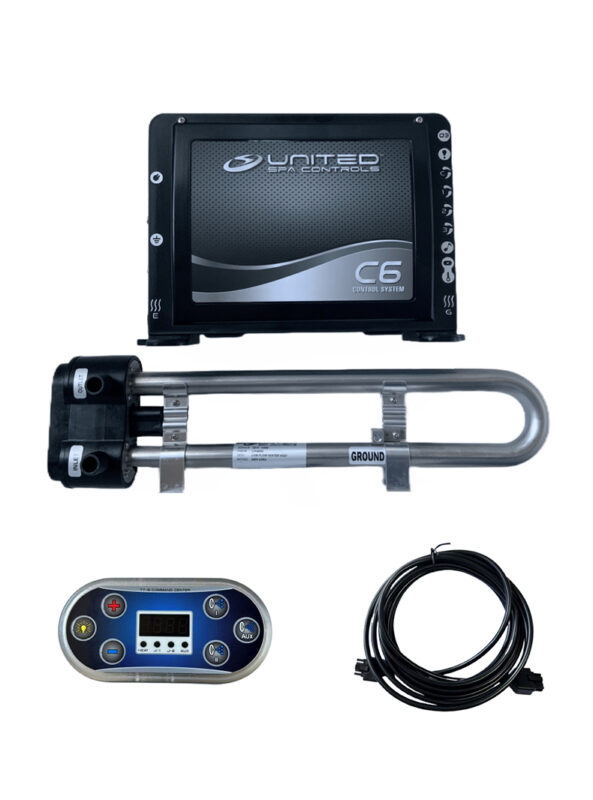
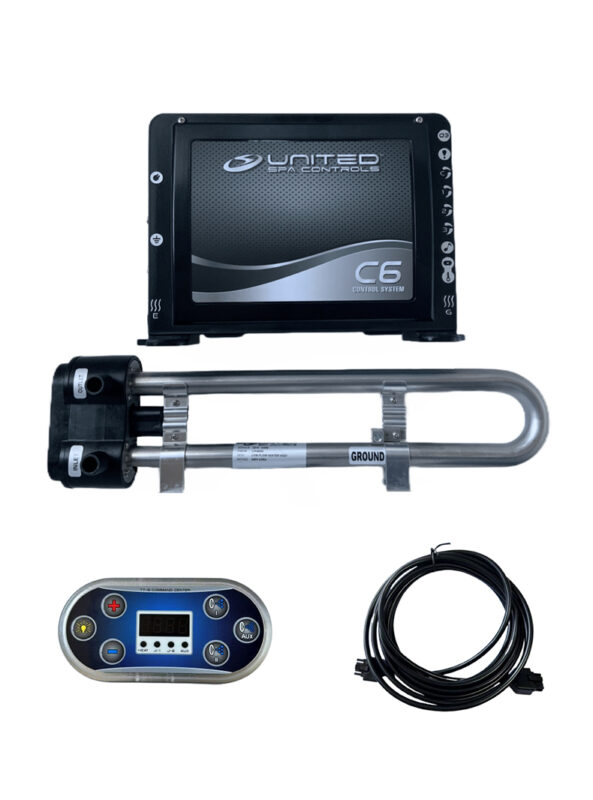
The United Spa Controls C6 is a control box without an integrated heater. It is designed to control a separately plumbed electric heater assembly. The C6 does not include a gas interlock relay or gas heater interface circuit. It is an electric spa control system.
United Spa Controls CB117P
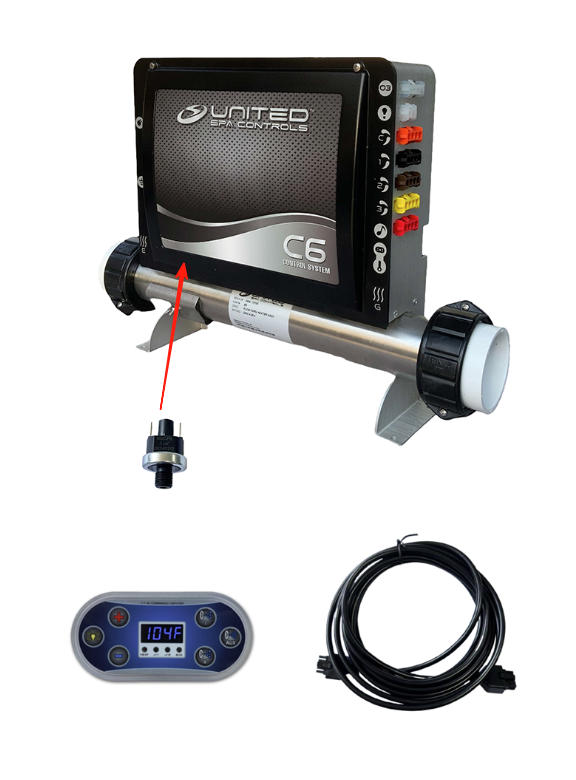
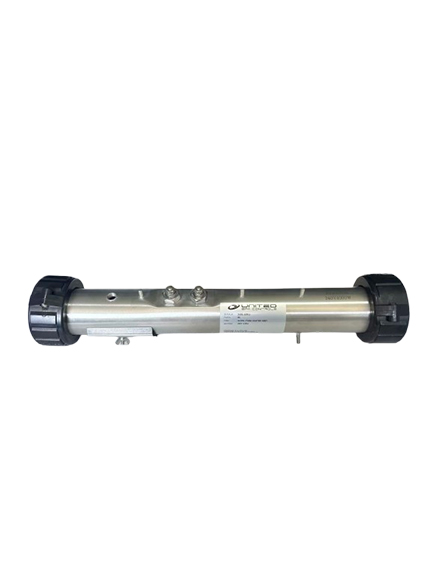
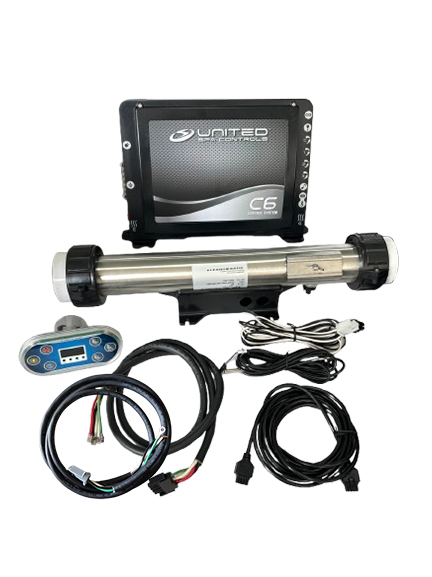
The United Spa Controls CB117P integrates a bottom-mount electric heater assembly directly into the control box enclosure. The heater is a standard resistance element — there is no gas interface. The CB117P is the most widely specified replacement for aging residential electric spa control systems.
United Spa Controls CR117S
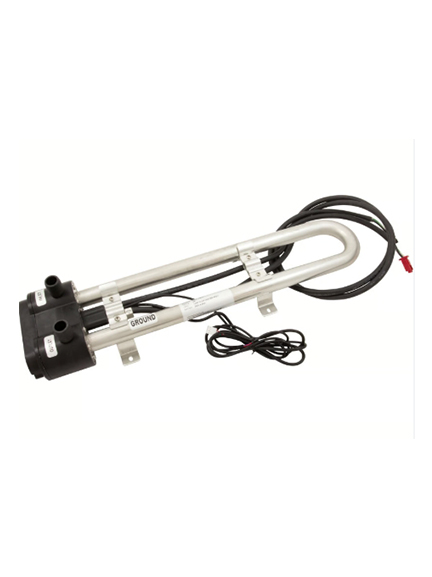
The United Spa Controls CR117S uses a remote electric heater — a separate heater unit plumbed inline with the circulation loop. The remote heater is an electric resistance unit, not a gas appliance. The CR117S is designed for electric spa configurations where the heater is located away from the control box.
None of these systems provide a gas heater interface. If your installation requires a gas heater spa control, the United Spa Controls range is not the correct product line, and you should contact a specialist in gas spa equipment.
When to Choose Electric vs. Gas for Spa Heating
For most hot tub owners, the choice between gas and electric heating is already made by the existing installation. Replacement decisions are typically like-for-like. However, for new installations or major renovations, the following guidance applies:
Choose Electric Spa Heating When:
- The spa is a standard residential hot tub under 500 gallons
- The spa runs continuously (kept at temperature) rather than heated on demand
- There is no existing gas infrastructure at the installation site
- Local electricity rates are moderate
- Installation simplicity is a priority — no permits, no gas contractor required for the heater itself
- Long-term maintenance simplicity matters — electric elements are simple and inexpensive to replace
Choose Gas Spa Heating When:
- The spa is a swim spa or large therapy pool requiring fast heat-up
- The spa is heated infrequently from cold (gas is more cost-effective for on-demand large-volume heating)
- Natural gas infrastructure already exists at the site
- Local gas prices are significantly lower than electricity on a BTU basis
- Heat-up time is critical — gas can heat large volumes 3–5x faster than electric
For nearly all residential hot tub replacements, the correct choice is an electric system. The United Spa Controls CB117P or CR117S covers the vast majority of residential replacement scenarios. See the United Spa Controls C6 vs CB117P comparison to determine which electric system matches your existing configuration.
Gas Heater Spa Control Troubleshooting: Common Issues
For installations that do use a gas heater spa control, several common faults present differently from electric spa systems. Understanding these differences helps avoid misdiagnosis.
Gas Heater Not Igniting
If the spa calls for heat (set temperature not reached) but the gas heater does not ignite, possible causes include: no relay signal from the control box, failed ignition board in the gas heater, gas supply interruption (check valve position and gas meter), or a failed thermocouple or flame sensor that is preventing the ignition sequence from completing.
The first diagnostic step is to verify that the control box is sending the relay signal to the gas heater when heat is called for. If the signal is present at the control box output but the heater does not fire, the fault is in the gas heater itself — not the control system.
Gas Heater Short-Cycling
Short-cycling — the gas heater firing and shutting off in rapid succession — is typically caused by a dirty or failed temperature sensor sending inaccurate readings to the control box, or a gas heater with a restricted heat exchanger that triggers the high-limit before transferring heat to the water. See our guide on the spa temperature sensor for testing procedures applicable to both gas and electric systems.
FLO Error with Gas Heater
A FLO or low flow error on a gas heater spa control has the same root causes as on an electric system: blocked filter, closed valves, air lock, or failed flow switch. The flow protection logic is identical regardless of the heat source. See our detailed guide on spa low flow heater errors for the full diagnosis sequence.
SpasRus stocks the full United Spa Controls range — C6, CB117P, and CR117S — for residential electric spa control replacement. Worldwide shipping from our North American warehouse.
Browse United Spa Controls Systems → Ask Us Which System You Need
Frequently Asked Questions: Gas Heater Spa Control
Can I use a United Spa Controls system with a gas heater?
No. United Spa Controls C6, CB117P, and CR117S systems are designed for electric heater configurations. They control heating by switching line voltage directly to an electric resistance element. They do not include a gas interlock relay or the interface circuitry required to control a gas heater ignition board. If your spa uses a gas heater, you need a control system specifically designed for gas heater integration — not a United Spa Controls unit. Contact SpasRus if you are uncertain about your existing heater type before ordering.
How do I know if my hot tub has a gas heater or an electric heater?
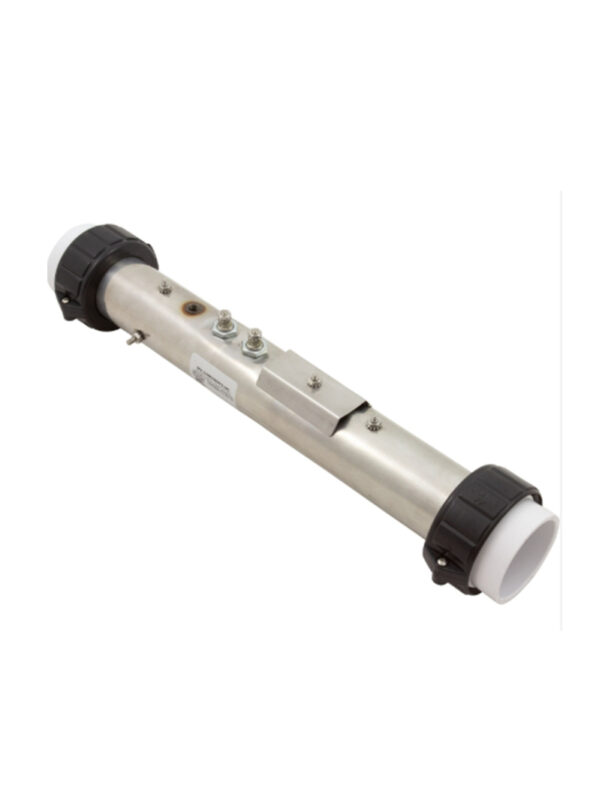
Open the spa equipment bay and look at the heater assembly. An electric heater will have electrical wiring terminals (typically two heavy-gauge wires) and a stainless steel or titanium element housing — it looks like a cylinder or manifold with wiring connections. A gas heater will have a burner unit, a visible gas supply line (copper or flexible metallic tubing), and a flue pipe or venting connection for exhaust gases. If you see a gas line connected to the heater, it is a gas unit. If you see only electrical connections, it is electric.
Is a gas heater more cost-effective than electric for a hot tub?
It depends on usage pattern and local energy prices. For a continuously maintained hot tub (kept at temperature), electric heating is often more efficient because a well-insulated hot tub loses relatively little heat and only needs a modest electric element to maintain temperature. Gas heating becomes more cost-effective when heating a large volume from cold — the high BTU output of a gas heater reduces heat-up time significantly. If you heat your spa only occasionally or own a large swim spa, gas may provide better economics. For standard residential hot tubs kept at temperature, electric is typically the practical choice.
My gas heater spa control is showing an OH error. What does that mean?
An OH (overheat) error on a gas heater spa control means the control system has detected water temperature above the safety threshold — typically 108°F (42°C). On a gas system, OH errors are often caused by short-cycling (the gas heater fires rapidly and drives up water temperature before the circulation system can distribute the heat), a failed temperature sensor reading erroneously high, or restricted flow through the heat exchanger causing localized overheating. If the OH error appears with water at normal temperature, test the temperature sensor first. See our temperature sensor testing guide for the multimeter procedure.
What is the difference between a gas spa heater and a gas pool heater?
Gas spa heaters and gas pool heaters use the same combustion technology but differ in BTU output, heat exchanger design, and control interface. Spa heaters are typically rated at 100,000–150,000 BTU and are designed for smaller water volumes with higher target temperatures (up to 104°F). Pool heaters are rated at 150,000–400,000+ BTU for larger water volumes at lower temperatures. Pool heaters are not suitable for spa use without modification — the control interface, thermostat range, and water chemistry requirements differ. Always use a heater rated and listed for spa use in a hot tub application.
Can I replace a gas heater spa with an electric United Spa Controls system?
Converting from gas to electric is possible but involves more than replacing the control box. You would need to remove the gas heater and plumbing, install an electric heater assembly in its place, run a dedicated 240V electrical circuit if one is not already present, and cap or remove the gas supply line (which requires a licensed gas contractor in most jurisdictions). For a standard residential hot tub, this conversion is technically feasible. However, if the goal is simply to replace a failed gas heater with a working unit, replacing the gas heater with a matched gas unit is faster and less expensive than a full conversion. Contact SpasRus to discuss your specific situation before deciding on an approach.
Electric Spa Control Replacement: Where to Start
If your spa uses an electric heater and you need a replacement control system, SpasRus stocks the complete United Spa Controls range for residential and light commercial applications. The CB117P covers the majority of bottom-mount heater configurations, and the CR117S is the standard replacement for remote heater installations.
Not sure which system matches your existing setup? See the United Spa Controls C6 vs CB117P comparison guide or contact us with your existing system model number and heater configuration.
Browse all United Spa Controls systems and accessories at SpasRus.
SpasRus is a North American retailer specializing in United Spa Controls spa systems, heaters, topside panels, sensors, and compatible replacement parts for residential and light commercial hot tubs.