Spa Pressure Switch: 5 Proven Signs It Needs Replacing

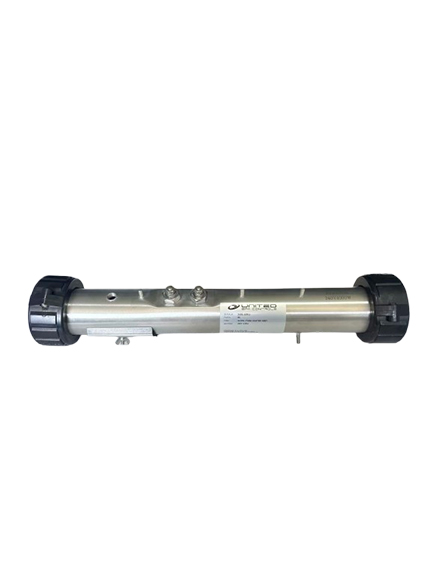
- The spa pressure switch is a normally-open safety device that closes when pump flow is sufficient — allowing the heater to operate. A failed spa pressure switch produces a persistent FLO error even when the pump is running normally.
- The five signs it needs replacing are: permanent FLO error, intermittent heating, FLO error that clears at high pump speed only, heater cutting out mid-session, and visible corrosion or cracks on the switch body.
- A spa pressure switch can be tested with a multimeter in continuity mode — it should be open at rest and closed when the pump is running at normal speed.
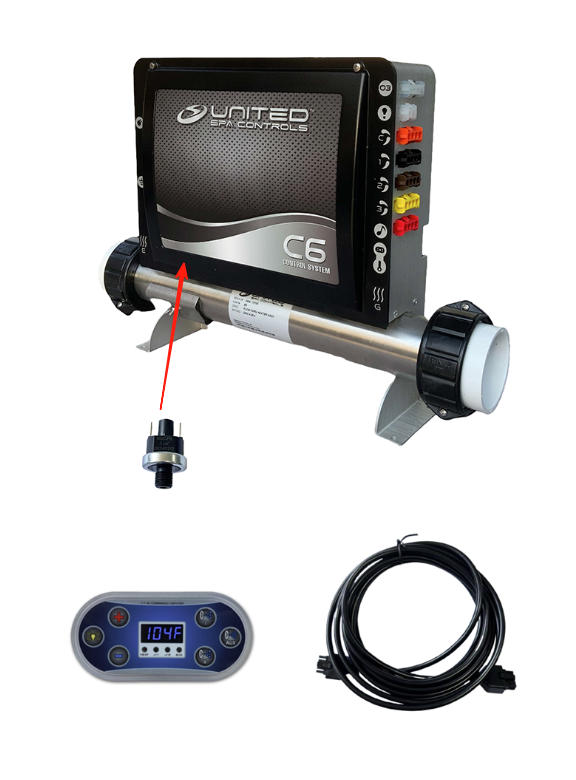
- United Spa Controls CB117P and CR117S systems include the spa pressure switch pre-installed in the heater manifold — no separate sourcing or calibration required.
- Switch failure must be diagnosed carefully — the same FLO error is produced by air locks, low water flow, and a blocked filter, all of which are more common than a failed switch.
The spa pressure switch is a small component with a critical function: it is the safety device that allows the heater to operate. When the spa pump moves water through the heater manifold, the resulting water pressure closes the spa pressure switch — completing the heater circuit and enabling the element to heat. Without a correctly functioning spa pressure switch, the heater cannot run, regardless of the water temperature setting or the condition of the heating element itself.
A faulty spa pressure switch is one of the most common causes of a persistent FLO error on United Spa Controls and other spa systems. The FLO error means “flow not detected” — and because both a blocked filter and a failed pressure switch produce the same error code, a failed switch is frequently misdiagnosed as a pump or plumbing problem. Understanding how the spa pressure switch works, how to test it, and what the five signs of failure look like prevents unnecessary pump replacements and heater work.
This guide covers how the spa pressure switch operates in a United Spa Controls system, the five signs it is failing, how to test and replace it, and what to do when a FLO error persists after the switch is replaced.
For the full United Spa Controls system overview, see the United Spa Controls Brand Overview.
How a Spa Pressure Switch Works
A spa pressure switch is a normally-open electrical switch that closes in response to water pressure. In a hot tub system, the switch is mounted on the heater manifold — the inlet or outlet port of the heater housing — where it is exposed to the water pressure generated by the pump. When the pump runs and flow reaches the minimum threshold (typically around 1–2 PSI on residential systems), the spa pressure switch closes, completing the signal circuit back to the control board.
The control board interprets a closed switch as confirmation that adequate water flow is present for safe heater operation. It then activates the heater relay, allowing 240V to reach the heating element. This sequence — pump on → pressure builds → spa pressure switch closes → heater relay activates — is the fundamental heating loop of every spa system using this design.
If the spa pressure switch remains open (either because of insufficient flow or because the switch itself has failed mechanically), the control board never activates the heater relay. The board logs this condition as a FLO error and holds the heater off as a safety precaution. This is why a FLO error always accompanies a switch fault — the error is the board’s response to a switch that is not closing as expected.
The spa pressure switch is separate from the flow switch used on some older systems. A flow switch detects the physical movement of water using a paddle or impeller mechanism. The pressure switch detects pressure — it does not have any moving parts in the water, which makes it more reliable in mineral-rich or saltwater spa applications.
5 Proven Signs Your Spa Pressure Switch Needs Replacing
Sign 1: Permanent FLO Error With the Pump Running
The clearest sign of a failed pressure switch is a FLO error that persists while the pump is confirmed running and water flow is visible through the jets. If the pump is moving water normally but the FLO error does not clear, the heater is not receiving the closed-switch confirmation it needs to activate.
Before concluding the switch has failed, rule out the more common causes of a FLO error that coincide with a running pump: a partially blocked filter (reduces pressure even with the pump running), an air pocket in the heater manifold near the switch port (prevents the switch from sensing water pressure), or a kinked or blocked return line. If all of these are ruled out and the FLO error persists, the pressure switch itself is the likely fault. For the full FLO diagnosis, see the United Spa Controls Low Flow Heater guide.
Sign 2: Intermittent Heating — Heater Works Sometimes but Not Always
A spa pressure switch that is failing intermittently — contact corrosion causing the switch to open and close erratically — produces intermittent heating rather than a permanent FLO error. The heater works on some sessions but not others, or cuts out during a session without warning. The switch may close when the system is warm but not on cold startup, or vice versa.
Intermittent the pressure switch faults are the hardest to diagnose because the FLO error may not be present when the fault is being investigated. If the spa heats normally on some occasions but shows FLO on others, and the filter and flow path are confirmed clean, a borderline the pressure switch is the most likely cause. See also the Spa Heater Not Heating guide for the full intermittent heating diagnostic flow.
Sign 3: FLO Error Clears at Full Pump Speed But Returns at Low Speed
A switch that has a higher-than-specified closing threshold will clear the FLO error at high pump speed (where pressure is highest) but show FLO during low-speed filtration cycles or when jets are set to low. This means the heater operates correctly during jet sessions but fails during the automatic filtration cycle — the spa comes on in the morning colder than expected, even though it heated fine the evening before.
This speed-dependent FLO pattern is a classic sign of a pressure switch that has drifted out of calibration or has internal corrosion increasing the closing threshold. Replacing the switch resolves this fault cleanly.
Sign 4: Heater Cuts Out Mid-Session
A switch that closes correctly on startup but vibrates open during operation — due to pump vibration, loose mounting, or an internal mechanism that is on the edge of failure — causes the heater to cut out mid-session. The FLO error appears during the session, often accompanied by the heater indicator going off on the topside panel. The pump continues to run, but the heater stops.
This failure pattern can mimic a thermal overload trip in the heater element, which also causes mid-session heater cutout. The key diagnostic difference: a thermal overload trip sets an OH or HH (overheat) error code, while a spa pressure switch fault sets a FLO error code. See the Spa Control System Error Codes guide to confirm which code your system is displaying.
Sign 5: Visible Corrosion or Physical Damage on the Switch Body
A switch showing visible corrosion on its electrical terminals on its electrical terminals, mineral deposits around the port fitting, cracks in the switch body, or water seeping from around the switch threads should be replaced proactively — even if it is currently passing continuity tests. Physical damage on the switch body indicates the internal mechanism is exposed to moisture, and failure is imminent.
On United Spa Controls systems, the switch is mounted directly on the heater manifold. Inspect it during filter cleaning sessions — a 30-second visual check catches deteriorating switches before they produce a FLO error and an unexpected cold spa.
How to Test a Spa Pressure Switch
Testing a spa pressure switch requires a multimeter set to continuity mode (or resistance mode). The test takes two steps — one with the system off (checking the switch is open at rest) and one with the pump running (checking the switch closes correctly).
Step 1 — Test at rest (pump off). Disconnect the two signal wires from the spa pressure switch terminals. Set the multimeter to continuity mode and probe both terminals. With the system off and no water pressure, the spa pressure switch should read open (no continuity, no beep). If the switch reads closed at rest, it has failed in the closed position — this will prevent a FLO fault but will allow the heater to run without flow protection, which is a safety hazard.
Step 2 — Test under pressure (pump running). Reconnect the signal wires, start the pump, and allow pressure to build for 10–15 seconds. Then disconnect the signal wires again and test continuity. With the pump running at normal speed, the spa pressure switch should read closed (continuity present, multimeter beeps). If the switch still reads open with the pump running and flow is confirmed through the jets, the switch is not closing at normal operating pressure — replace it.
Important safety note: Disconnect power at the GFCI breaker before touching any electrical terminals. Refer to the Electrical Safety Foundation International for guidance on safe electrical testing procedures around spa systems.
If the switch tests closed at rest and open under pressure, the switch contacts have inverted — a failure mode caused by internal corrosion that reverses the contact orientation. This is uncommon but does occur on switches exposed to high mineral-content water over many years.
the pressure switch in United Spa Controls Systems
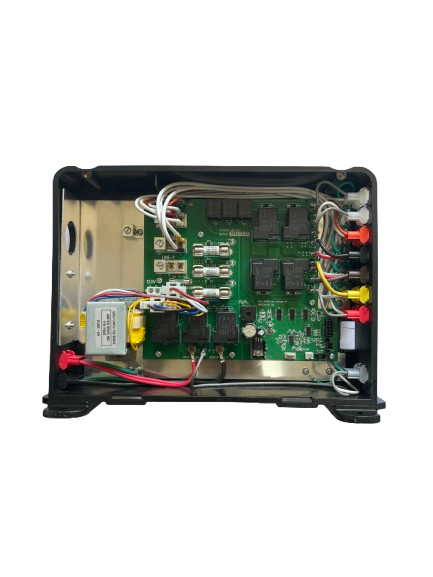
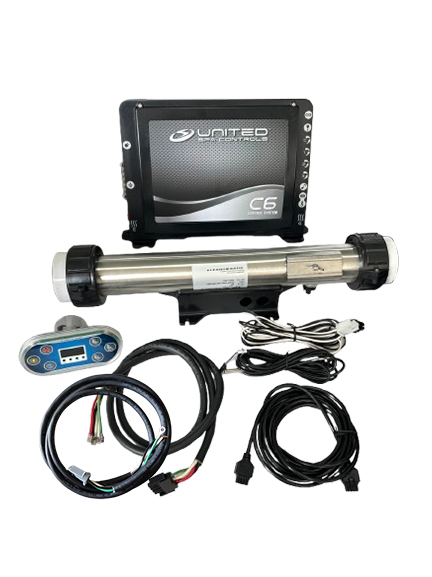
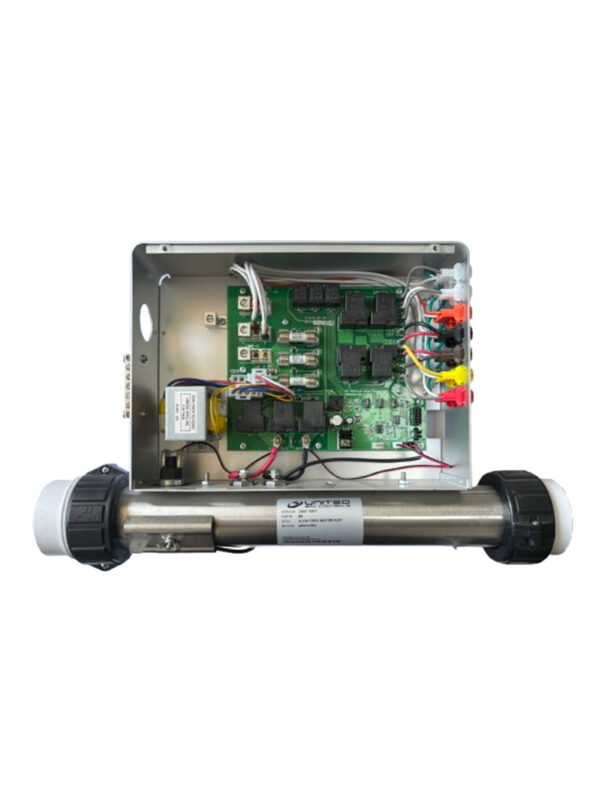
United Spa Controls CB117P and CR117S systems include the spa pressure switch as part of the complete heater manifold assembly. The switch arrives pre-installed and pre-calibrated on the heater manifold — no separate adjustment is required after installation.
| System | Pressure Switch Included | Heater Type | Notes |
|---|---|---|---|
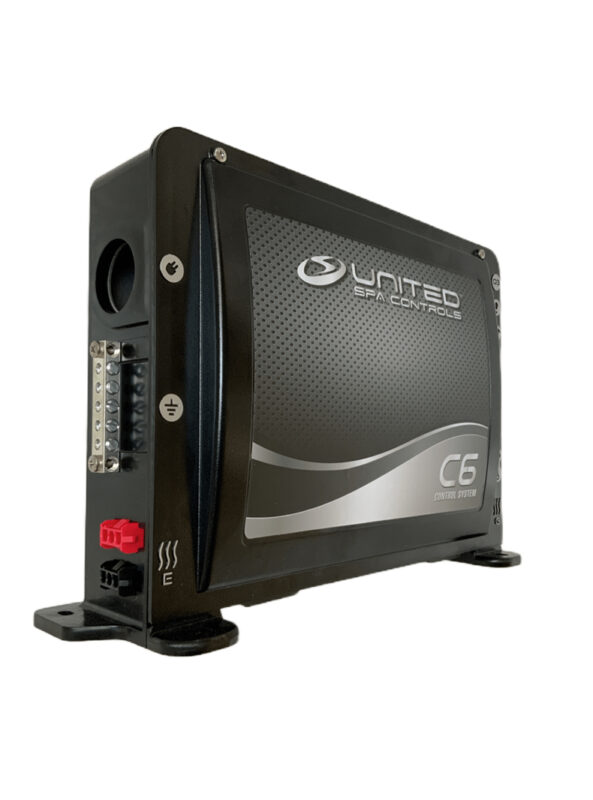
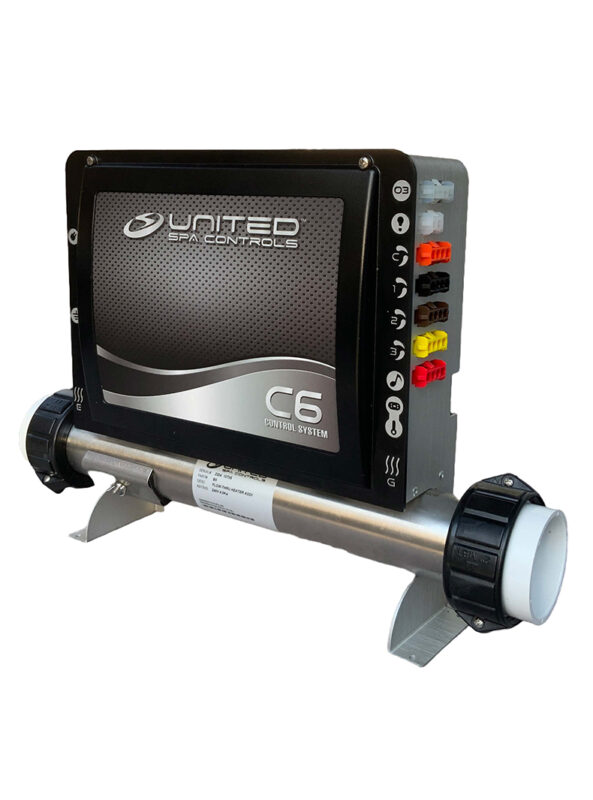
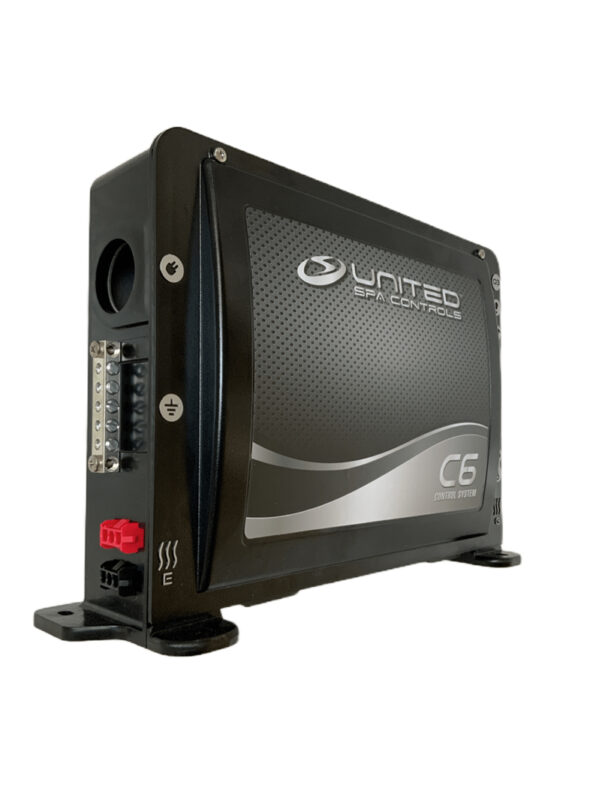
| C6 | ✅ Pre-installed | Inline heater | Entry-level system; standard residential flow requirement |
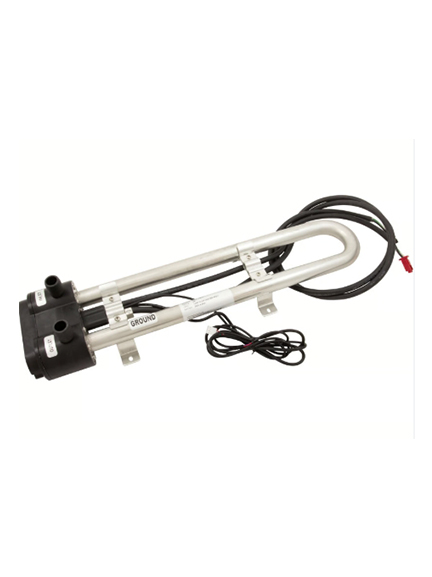
| CB117P | ✅ Pre-installed on manifold | Bottom heater (S-type) | Most common system; switch calibrated to S-type manifold |
| CR117S | ✅ Pre-installed on manifold | Bottom heater (S-type) | Higher-output system; same switch type as CB117P |
When a spa pressure switch fails on a United Spa Controls system, the most straightforward repair is to replace the switch using the original-specification part sourced from SpasRus. Because the switch is mounted on the heater manifold, the heater does not need to be removed — the switch can be replaced while the manifold remains in position by disconnecting the two signal wires, unscrewing the switch (typically a 1/8 NPT or 1/4 NPT thread), applying PTFE tape to the threads of the new switch, and reinstalling.
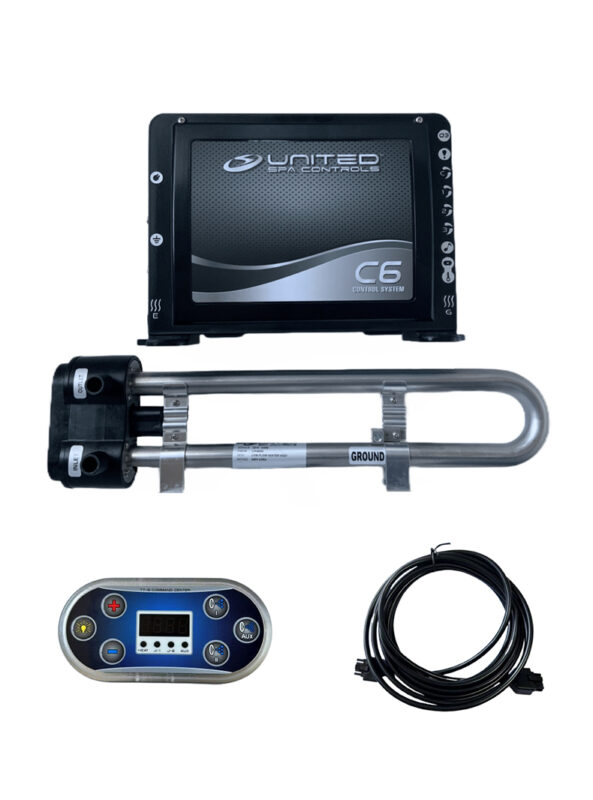
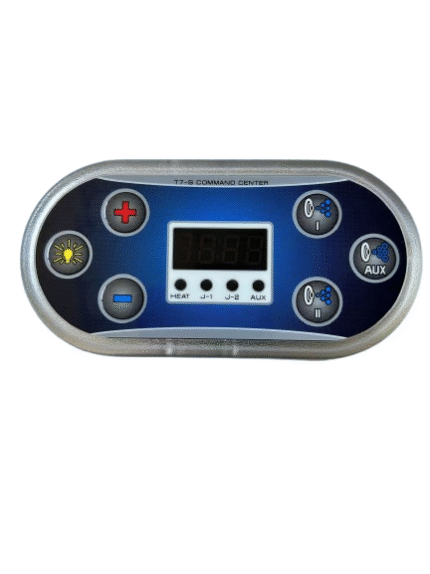
If the heater manifold itself shows corrosion or wear at the switch port threads, a full manifold replacement may be preferable to individual switch replacement. On an aging system where both the pressure switch and the heater element are suspect, replacing the entire control system — control box, heater, pressure switch, T7S panel — with a CB117P or CR117S is often the most cost-effective path. See the Spa Pack Replacement guide for the full repair-vs-replace decision framework.
For the C6 system specification and compatibility, see the C6 product page. For a comparison of C6 and CB117P, see the C6 vs CB117P guide.
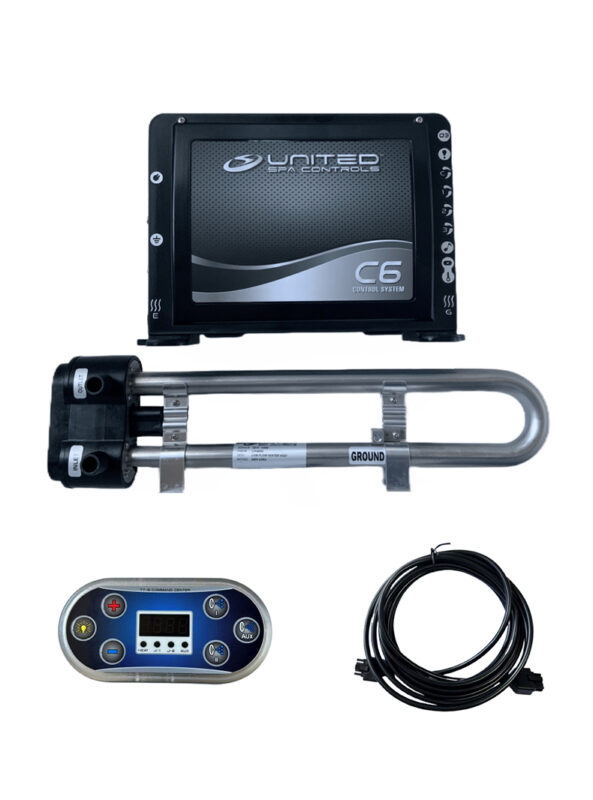
SpasRus stocks complete United Spa Controls CB117P and CR117S systems — control box, heater, T7S panel, pre-installed pressure switch, and temperature sensor — for worldwide dispatch.
Browse United Spa Controls Systems → Ask About Your FLO Error
Frequently Asked Questions: Spa Pressure Switch
What is the difference between a spa pressure switch and a flow switch?
A spa pressure switch detects water pressure using a diaphragm or bellows mechanism — it closes when the water pressure at the switch port exceeds the switch’s threshold setting. A flow switch detects physical water movement using a paddle or impeller in the water stream. Pressure switches are generally more reliable in hard water environments because there are no moving parts exposed to mineral deposits.
United Spa Controls CB117P and CR117S systems use a pressure switch, not a flow switch. If your spa uses a flow switch and you are replacing it with a United Spa Controls system, the plumbing configuration in the heater circuit will change accordingly.
Can I bypass the pressure switch to make the heater work?
Bypassing the spa pressure switch by shorting its two signal terminals together will make the heater operate regardless of water flow — this removes the primary safety protection against the element burning out when dry. Bypassing the switch for diagnostic purposes (to confirm the switch is the fault) is acceptable for a brief test, but the spa should never be left operating with the pressure switch bypassed. A bypass that causes the heater to run without flow can destroy the heater element in minutes and may create a fire hazard. Always replace a failed switch rather than bypassing it.
Why does my spa show FLO after replacing the pressure switch?
A persistent FLO error after replacing the pressure switch is usually caused by one of three things: an air pocket trapped in the heater manifold at the switch port, a blocked filter reducing flow below the switch’s threshold, or a wiring error on the switch signal terminals where the signal wires were not correctly reconnected to the control board header.
To resolve: bleed air from the heater manifold by briefly loosening the switch fitting with the pump running, check and clean the filter, and verify both signal wire connections at the control board sensor header.
How often does a spa pressure switch need replacing?
A pressure switch in a well-maintained spa typically lasts 5–10 years before showing signs of degradation. Factors that accelerate switch wear include high mineral content water (scale deposits affect the diaphragm mechanism), aggressive pH swings, and a spa located in a climate with significant temperature extremes that cause thermal cycling of the switch body. Inspecting the switch visually during annual equipment servicing and testing it every 3–4 years helps catch deteriorating switches before they cause an unexpected FLO fault.
My spa pressure switch tests closed but I still get a FLO error. What’s wrong?
If the switch tests correctly (open at rest, closed under pump pressure) but the FLO error persists, the problem is upstream in the signal circuit. Check that the signal wires are connected to the correct header pins on the control board — a connection to the wrong pin produces the same permanent FLO error as an open switch.
If the wiring is correct, the control board’s pressure switch input circuit may have failed — the board is not reading the closed switch signal. In this case, the fault is in the control board, not the switch itself. A United Spa Controls control box replacement resolves board-level input faults. See the Spa Control Box Replacement guide for more information.
Is the spa pressure switch the same as the high limit switch?
No. The spa pressure switch and the high limit switch are two separate safety devices. The pressure switch monitors water flow — it prevents the heater from running without adequate circulation. The high limit switch (also called the thermal cutoff or hi-limit) is a temperature-sensitive device that trips if the water temperature exceeds a safe maximum (typically around 118–122°F).
A tripped high limit switch produces an OH or HH error code, not a FLO error. Both devices work together to protect the heater element — the pressure switch provides flow protection and the high limit switch provides temperature protection.
Parts and Systems for Spa Pressure Switch Replacements
For the pressure switch replacements on United Spa Controls systems, contact SpasRus directly with your system model (C6, CB117P, or CR117S) and heater manifold type to confirm the correct switch specification. SpasRus stocks complete control system replacements — C6 and CB117P — for worldwide dispatch, with the pressure switch pre-installed on the heater manifold in every system.
For related FLO and heater fault guides, see the Spa GFCI Tripping guide, the S-Type Heater Fault guide, and the Spa Control Box Wiring guide.
Browse all United Spa Controls systems at SpasRus. For the full system range overview, see the United Spa Controls Brand Overview.
SpasRus is a North American retailer specializing in United Spa Controls spa systems, control boxes, pumps, heaters, sensors, and compatible replacement parts for residential and light commercial hot tubs.