Spa GFCI Tripping: 6 Proven Causes and Fixes

- Spa GFCI tripping means the breaker is detecting current leaking to ground — a real electrical fault that must be diagnosed before the spa is used.
- The six most common causes are: failed heater element, wet or shorted pump motor, ozone generator leak, wiring damage, failed control board, and a worn GFCI breaker itself.
- Isolate each component by disconnecting it and testing whether the GFCI holds — this identifies the fault without a multimeter in most cases.
- A shorted heater element is responsible for over 60% of spa GFCI trips and is the first component to test.
- Never reset and use a spa that keeps tripping GFCI — a ground fault in the water circuit is a shock hazard.
Spa GFCI tripping is one of the most urgent faults a hot tub owner can encounter. Unlike most spa problems — a cold tub, an error code, a dark topside panel — a GFCI trip is a safety event. The breaker is detecting electrical current flowing where it should not: out of the circuit and toward ground, which in a spa context means potentially through the water and anyone in it.
This guide explains how GFCI protection works in a United Spa Controls system, what causes spa GFCI tripping, how to isolate the fault component by component, and when component replacement versus full system replacement is the right decision.
Important: Do not reset and use a spa that repeatedly trips GFCI. Each trip is the breaker doing its job — preventing a shock hazard. Find and fix the cause before restoring power for use. Refer to the Electrical Safety Foundation International for general electrical safety guidance before working on any spa electrical system.
For a complete overview of United Spa Controls systems, see the United Spa Controls Brand Overview.
How GFCI Protection Works in a United Spa Controls System
A Ground Fault Circuit Interrupter (GFCI) monitors the current flowing out of a circuit on the hot wire and returning on the neutral wire. In a balanced circuit, these values are equal. If they differ by more than approximately 5 milliamps — indicating current is leaking out of the circuit through an unintended path — the GFCI trips and disconnects the circuit within milliseconds.
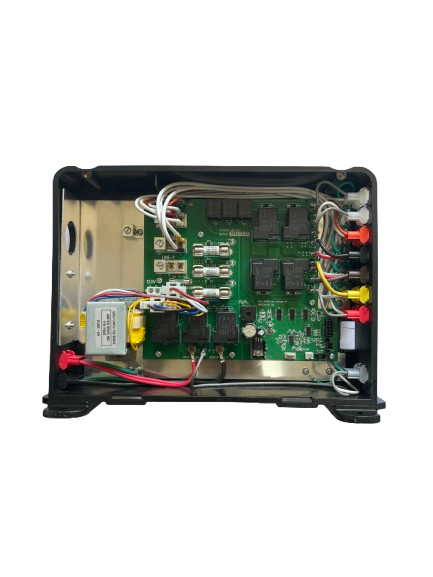
In a United Spa Controls installation, the GFCI breaker protects the entire spa electrical circuit: the control box, heater element, pump motors, lighting, and ozone generator. Any of these components developing a ground fault — current leaking from a live conductor to a chassis, ground wire, or water — will cause spa GFCI tripping.
Because the GFCI monitors the whole circuit, it cannot by itself tell you which component is at fault. Isolation testing — disconnecting components one at a time and testing whether the GFCI holds — is the standard diagnostic method.
Types of GFCI Trips
| Trip Pattern | Meaning | Where to Start |
|---|---|---|
| Trips instantly on power restore | Hard ground fault — likely heater element or shorted wiring | Disconnect heater element first |
| Trips when heater activates | Fault is in the heater circuit specifically | Test heater element resistance |
| Trips when jets activate | Fault is in a pump motor | Disconnect pump motors one at a time |
| Trips after running normally for a while | Thermal fault — insulation breaking down under heat | Heater element or pump motor insulation |
| Trips randomly / intermittently | Moisture ingress, ozone leak, or aging GFCI breaker | Check ozone generator and breaker age |
6 Causes of Spa GFCI Tripping
Cause 1: Failed Heater Element (Most Common)
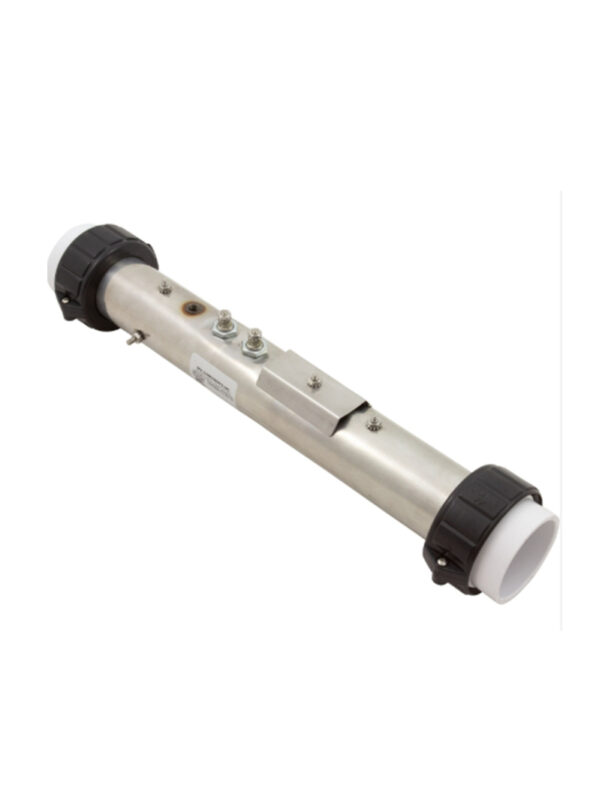
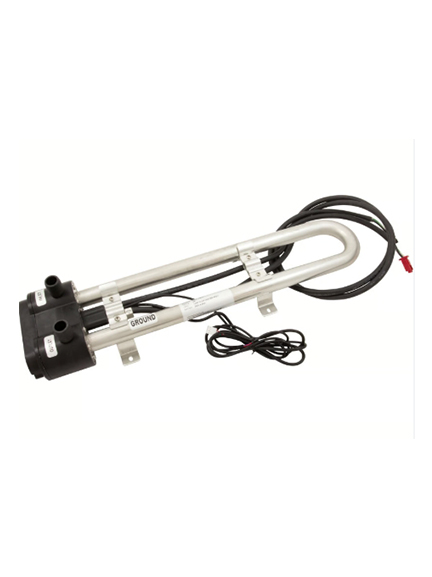
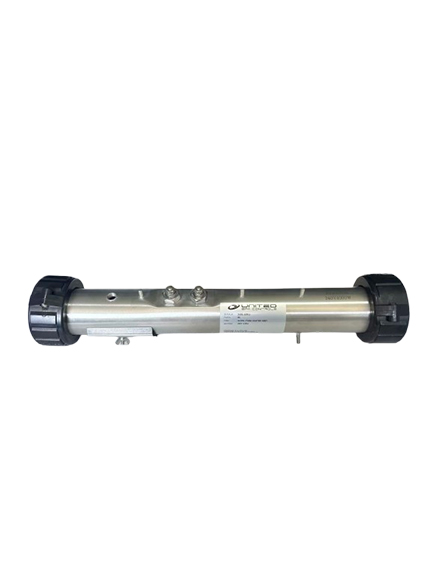
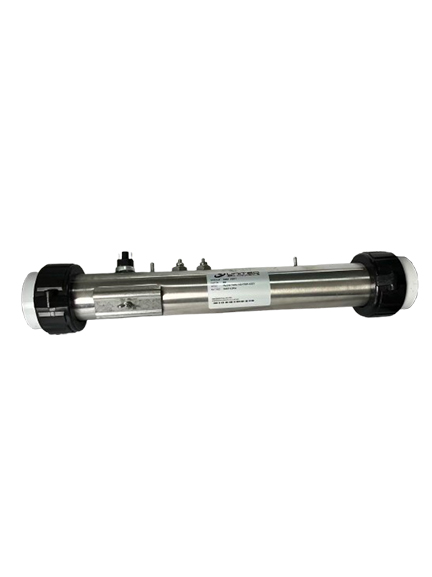
A failed heater element is responsible for the majority of spa GFCI trips. The heating element is a resistance wire sealed inside a stainless steel or titanium tube, surrounded by magnesium oxide insulation. When the element ages, the insulation breaks down — eventually allowing current to leak from the resistance wire to the outer tube, which is in contact with water. This is a direct ground fault and triggers immediate GFCI tripping.
Element failure can be sudden (the element shorts completely and trips the GFCI every time power is restored) or gradual (the element develops a partial leak that causes intermittent trips, particularly when the element is hot).
How to confirm: With power disconnected, disconnect the heater element leads from the control board. Set your multimeter to the highest resistance range (or megohm if available) and measure resistance between each element terminal and the heater housing (ground). A healthy element shows extremely high resistance (megohms) to ground. Any reading below 1 megohm — or a reading of 0 (short circuit) — confirms element failure.
Fix: On the United Spa Controls CB117P, the heater element is integrated into the bottom-mount heater assembly. Element replacement requires replacing the heater assembly — which is included in a complete CB117P system replacement. For the CR117S remote heater configuration, the remote heater unit is replaced independently.
Cause 2: Wet or Shorted Pump Motor
Pump motors in spa systems are sealed for moisture resistance, but seal degradation over time allows water or condensation to enter the motor windings. Water in the motor windings causes a ground fault whenever the motor runs — triggering spa GFCI tripping specifically when the jets are activated.
This failure pattern is distinctive: the GFCI holds when the spa is first powered on (the control box runs, the display comes on, the heater may even activate), but the GFCI trips the moment a pump is turned on.
How to confirm: With power disconnected, disconnect the pump motor leads from the control board. Restore power and test whether the GFCI holds without the pump connected. If it does, reconnect the pump and test again — if the GFCI trips when the pump is reconnected, the pump motor has a ground fault.
Fix: A pump motor with a confirmed ground fault requires replacement. Running a shorted pump motor risks damage to the control board and continued GFCI tripping.
Cause 3: Ozone Generator Ground Fault
Many spa installations include an ozone generator for water sanitation. Ozone generators produce high-voltage pulses that can degrade over time, and the ozone gas itself is corrosive to electrical connections. A failing ozone generator can develop a ground fault that causes intermittent spa GFCI tripping — often the most confusing trip pattern to diagnose because it does not correlate with a specific spa function.
How to confirm: With power disconnected, locate and disconnect the ozone generator from the control box. Restore power and test whether the GFCI trips pattern changes. If the GFCI stops tripping with the ozone generator disconnected, the ozone unit is the fault.
Fix: Replace the ozone generator. Running the spa without ozone is safe temporarily — the spa will rely on chemical sanitizers alone until the ozone unit is replaced.
Cause 4: Damaged Wiring or Compromised Connections
Physical damage to spa wiring — from rodents, pinching during installation, UV degradation, or water ingress into a conduit — can expose live conductors to the spa chassis or water. Damaged wiring can cause both immediate and intermittent spa GFCI tripping depending on the nature and location of the damage.
How to confirm: Visually inspect all wiring inside the equipment bay — heater element leads, pump leads, topside panel cable, lighting wiring, and the incoming power supply wires. Look for chewed insulation, cracked or burned wire jackets, or any point where bare copper is visible. Also inspect where wiring passes through conduit openings — sharp edges can abrade insulation over time.
Fix: Damaged wiring sections must be replaced. Do not tape over damaged insulation as a permanent fix — the underlying conductor may be compromised and the repair will fail under thermal cycling.
Cause 5: Failed or Moisture-Affected Control Board
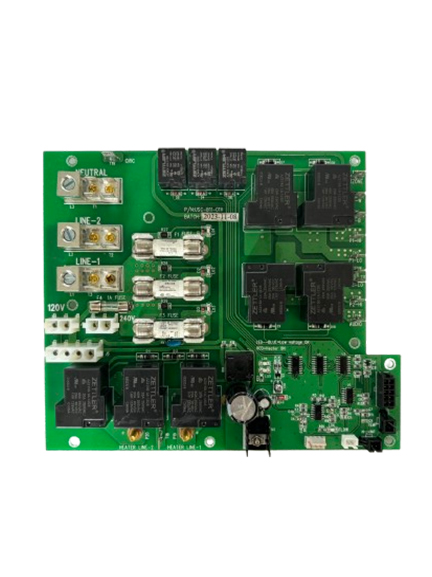
The United Spa Controls control board contains capacitors, relays, and printed circuit traces that can develop ground faults if moisture enters the control box enclosure, or if a relay or capacitor fails catastrophically. A failed control board typically causes spa GFCI tripping immediately on power restore, similar to a shorted element — but the element test comes back normal.
How to confirm: After confirming the heater element is not shorted, disconnect the element leads from the board and restore power. If the GFCI trips even with the element disconnected and all other components isolated, the control board has a ground fault.
Fix: Control board replacement. On aging United Spa Controls systems where the board has failed, a complete system replacement with the C6 or CB117P is often more cost-effective than sourcing a replacement board, as the new system includes a matched heater, topside panel, and all associated components.
Cause 6: Worn or Faulty GFCI Breaker
GFCI breakers have a finite lifespan — typically 10–15 years — and can develop internal faults that cause nuisance tripping even when the protected circuit has no actual ground fault. A worn GFCI breaker may trip under normal load conditions, trip due to minor electrical noise rather than actual ground faults, or fail to reset at all.
How to confirm: GFCI breaker age and history is the key indicator. If the breaker is more than 10 years old, has tripped many times, or fails to reset cleanly (does not latch and hold when the reset button is pressed), the breaker itself may be the issue. This diagnosis should only be reached after confirming all spa components are free of ground faults — replacing the breaker while a component fault exists will just result in the new breaker tripping immediately.
Fix: Replace the GFCI breaker. GFCI breaker replacement should be performed by a licensed electrician, as it involves work inside the main electrical panel.
Spa GFCI Tripping: Step-by-Step Isolation Sequence
The most efficient way to diagnose spa GFCI tripping is component isolation — disconnecting components one at a time and testing whether the GFCI holds. This method identifies the fault without requiring advanced electrical testing equipment in most cases.
Before starting: Disconnect power at the breaker. Do not attempt to work inside the equipment bay with power connected. All isolation steps below begin with power disconnected.
Step 1: Disconnect the heater element. Locate the heater element leads at the control board and disconnect them. Restore power. If the GFCI holds — the heater element is the fault. Confirm with a megohm test before ordering a replacement.
Step 2: Disconnect the pump motors. If the GFCI still trips with the element disconnected, disconnect the pump motor leads (all pumps if multiple). Restore power. If the GFCI holds — a pump motor has a ground fault. Reconnect pumps one at a time to identify which motor is faulty.
Step 3: Disconnect the ozone generator. If the GFCI still trips, disconnect the ozone generator. Restore power. If the GFCI holds — the ozone unit is the fault.
Step 4: Disconnect the lighting circuit. If present, disconnect spa lighting from the control box. Restore power and test.
Step 5: Inspect wiring. If the GFCI still trips with all major components disconnected, inspect the wiring harness for physical damage. A short in the supply wiring itself is rare but possible.
Step 6: Test the GFCI breaker. If all components have been isolated and the GFCI continues to trip with nothing connected, the GFCI breaker itself may be faulty. Have a licensed electrician evaluate the panel and breaker.
| Step | Disconnect | GFCI Holds After? | Conclusion |
|---|---|---|---|
| 1 | Heater element leads | Yes | Heater element is shorted — replace |
| 2 | All pump motor leads | Yes | A pump motor has a ground fault — identify which |
| 3 | Ozone generator | Yes | Ozone generator is faulty — replace |
| 4 | Lighting circuit | Yes | Lighting has a ground fault — inspect and replace |
| 5 | All components | Still trips | Wiring damage or faulty GFCI breaker |
Spa GFCI Tripping and United Spa Controls: System-Specific Notes
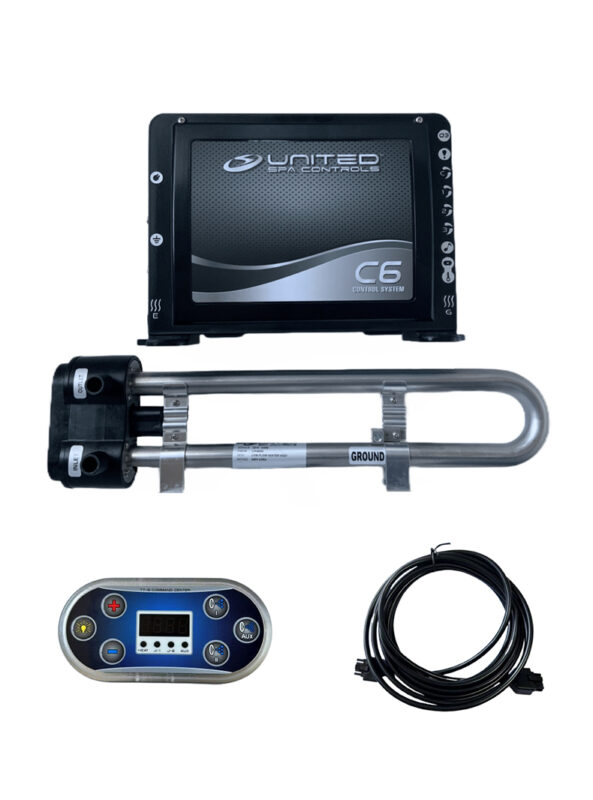
United Spa Controls C6, CB117P, and CR117S systems each have slightly different heater configurations that affect how GFCI trips are diagnosed.
CB117P: Bottom-Mount Integrated Heater
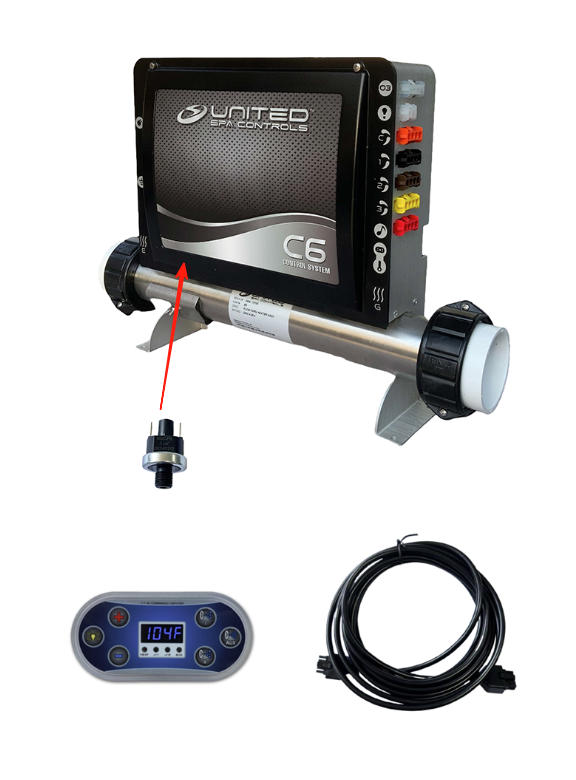
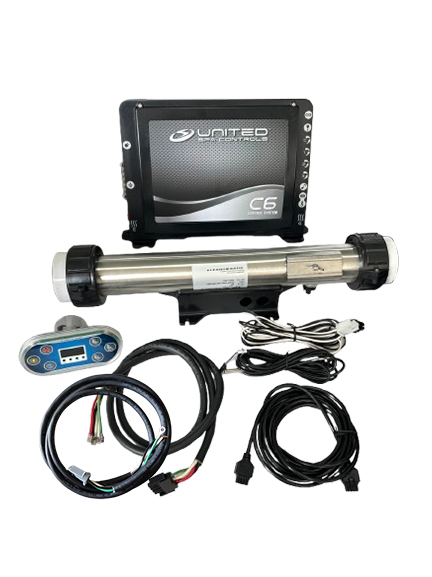
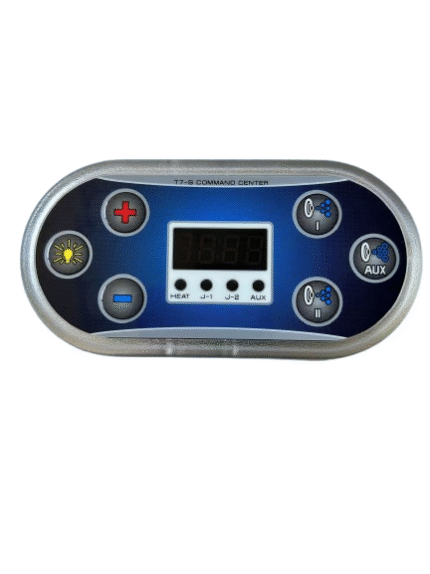
On the CB117P, the heater element is integrated into the bottom-mount assembly below the control box. The heater element leads connect directly to the control board inside the enclosure. When the CB117P heater element fails and causes spa GFCI tripping, the standard replacement is a complete CB117P system — which includes a new element, new pressure switch, new control board, and new T7S topside panel as a matched unit.
CR117S: Remote Heater
On the CR117S, the heater is a remote unit plumbed separately from the control box. The element leads run from the remote heater to the control box via conduit. A ground fault in the CR117S heater element may be easier to isolate than on the CB117P because the heater wiring is physically separate — you can disconnect it at the heater unit itself. Replace the remote heater unit if the element is confirmed shorted.
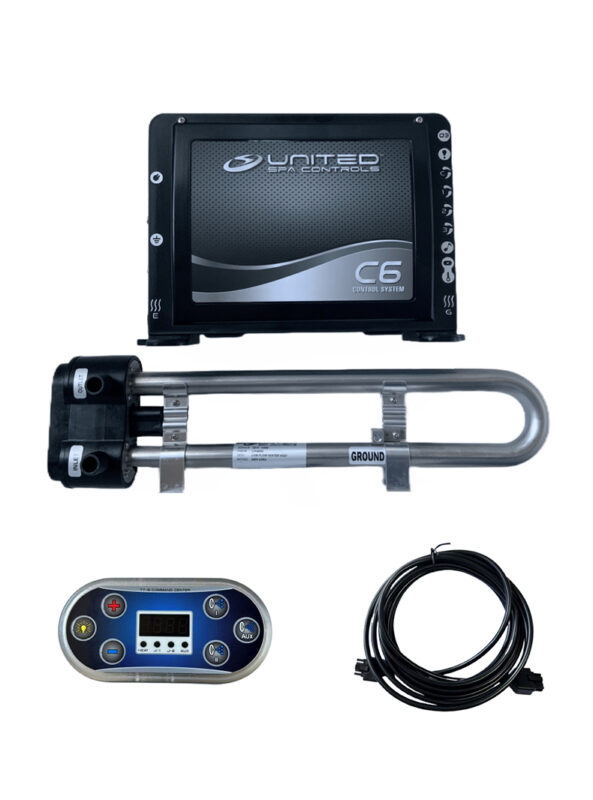
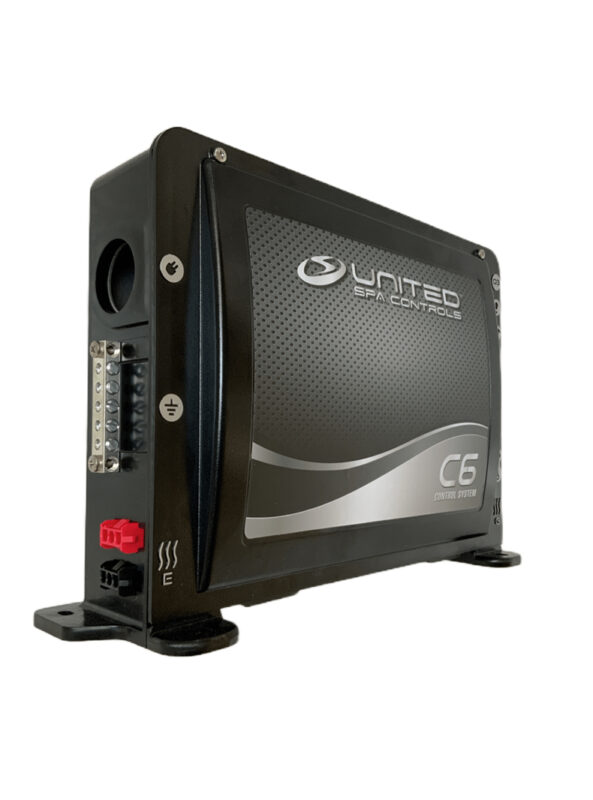
C6: Control Box Without Integrated Heater
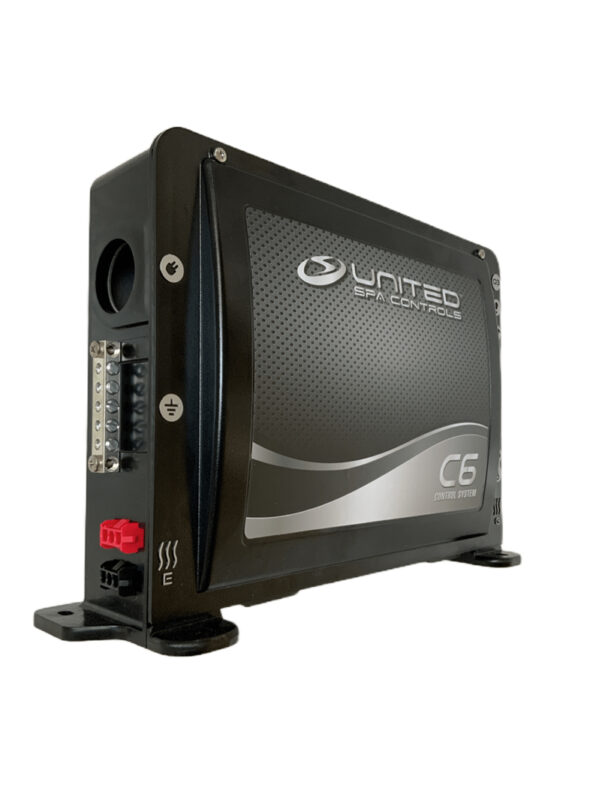
The C6 controls a separately plumbed heater. GFCI diagnosis on a C6 system follows the same isolation sequence — disconnect the heater element first, then the pumps. The advantage of the C6 configuration is that the heater and control box are physically separate, making isolation testing straightforward.
When to Replace vs. Repair After Spa GFCI Tripping
Once the fault component has been identified, the decision between repair and full system replacement depends on system age and the cost of individual parts.
Replace just the component when: The system is less than 8 years old, the rest of the system is in good condition, and only one component has failed. A shorted pump motor or a failed ozone generator in an otherwise healthy system is a straightforward component replacement.
Consider full system replacement when: The system is more than 10 years old, the heater element has failed (especially on CB117P where element replacement means heater assembly replacement), or multiple components show signs of age. In many cases, the cost of replacing just the CB117P heater assembly approaches the cost of a complete new system — which also refreshes the control board, topside panel, and all sensors.
For a detailed guide on when to replace the complete system versus individual components, see our Spa Control Box Replacement guide.
If the heater not heating alongside GFCI trips is the issue, see also: Spa Heater Not Heating: 7 Proven Fixes.
SpasRus stocks the CB117P complete system and CR117S remote heater configurations for fast worldwide dispatch. If your heater element has caused a GFCI trip, we can confirm the correct replacement before you order.
Browse United Spa Controls Systems → Contact Us to Confirm Your Part
Frequently Asked Questions: Spa GFCI Tripping
Is it safe to reset and use my spa after a GFCI trip?
No. A GFCI trip indicates a ground fault — current is leaking from the circuit through an unintended path. In a spa, that path could be through the water. Using a spa with an active ground fault creates a shock hazard. Reset the breaker only for diagnostic purposes — to test whether it holds after isolating a specific component — not to resume normal spa use. The spa should not be used until the fault has been identified and the faulty component replaced.
My spa GFCI trips in the morning but not during the day. Why?
GFCI trips that occur in the morning or at night but not during warmer parts of the day often indicate a thermal fault — an insulation breakdown that only leaks current when a component is cold or has been running for an extended period. The most common cause is a heater element with degraded insulation that passes a cold resistance test but leaks when thermally cycled. A degraded pump motor seal can show similar behavior. Test both the heater element and pump motor insulation resistance to ground using a megohm meter if intermittent morning trips are the pattern.
How do I know if my spa heater element is causing the GFCI trip?
The fastest check is the isolation test: disconnect the heater element leads from the control board, then restore power. If the GFCI holds after the element is disconnected, the element is the cause. To confirm, measure resistance between each element terminal and the heater housing (metal tube) — a healthy element shows no continuity to ground (megohms of resistance). Any reading below approximately 1 megohm, or a continuity reading (near 0 ohms), confirms the element has an internal short to ground and must be replaced.
Can rain or water in the equipment bay cause spa GFCI tripping?
Yes. Water ingress into the control box enclosure or equipment bay can cause ground faults by creating conductive paths between live components and the chassis. This is more common after heavy rain, flooding, or if the equipment bay cover is missing or damaged. If GFCI tripping started after wet weather, open the equipment bay and inspect for water inside the control box. Allow the enclosure to dry completely before restoring power — use a fan or gentle heat if needed. If the control board shows corrosion or water staining, it may need replacement even after drying.
My GFCI trips when the heater turns on but not when the jets run. What does that mean?
A GFCI trip specifically when the heater activates — but not when the jets run — strongly indicates a fault in the heater element or heater circuit wiring. The element is the most likely cause: it has developed a ground fault that only draws enough current to trip the GFCI under the thermal and electrical load of the heating cycle. Disconnect the element leads and test as described above. If the element is confirmed shorted, replace it — on a United Spa Controls CB117P this means replacing the heater assembly, which is included in a complete CB117P system replacement.
How long do spa GFCI breakers last?
GFCI breakers typically last 10–15 years under normal conditions. However, spa GFCI breakers are exposed to repeated tripping cycles, outdoor temperature extremes, and the electrical noise generated by pump motors and heater elements — all of which shorten their lifespan. A GFCI breaker that is more than 10 years old, has tripped many times, or fails to latch and hold when reset should be replaced as part of any GFCI troubleshooting process — but only after confirming no component fault exists in the spa circuit. Have a licensed electrician replace the breaker, as it involves work inside the main panel.
Parts for Spa GFCI Tripping Repairs
SpasRus stocks complete United Spa Controls systems for the most common GFCI fault scenario — a failed heater element. The CB117P provides a complete replacement heater assembly, control board, pressure switch, and T7S topside panel in a single matched system.
For CR117S remote heater configurations, SpasRus stocks compatible remote heater assemblies for direct replacement without changing the control box.
If you have completed the isolation sequence above and are uncertain which component caused your spa GFCI tripping, contact SpasRus with your system model and your isolation test results — we can confirm the correct replacement before you order.
Browse all United Spa Controls systems and replacement parts at SpasRus.
For a full overview of United Spa Controls system selection, see the United Spa Controls Brand Overview.
SpasRus is a North American retailer specializing in United Spa Controls spa systems, heaters, topside panels, sensors, and compatible replacement parts for residential and light commercial hot tubs.