
Spa Heater Not Heating? Here’s How to Diagnose and Fix It

Spa Heater Not Heating? Here’s How to Diagnose and Fix It
If your spa heater is not heating, you are not alone — spa heater not heating is one of the most frequently searched hot tub problems.
A spa heater that won’t heat is often misunderstood. Many spa owners assume the heater element has failed and replace it, only to find the problem persists.
In most cases, the issue is not the heater itself — but water flow, sensor failure, electrical configuration, or a fault in the spa control system. Understanding why helps you solve the problem the first time — without wasting money on unnecessary parts.
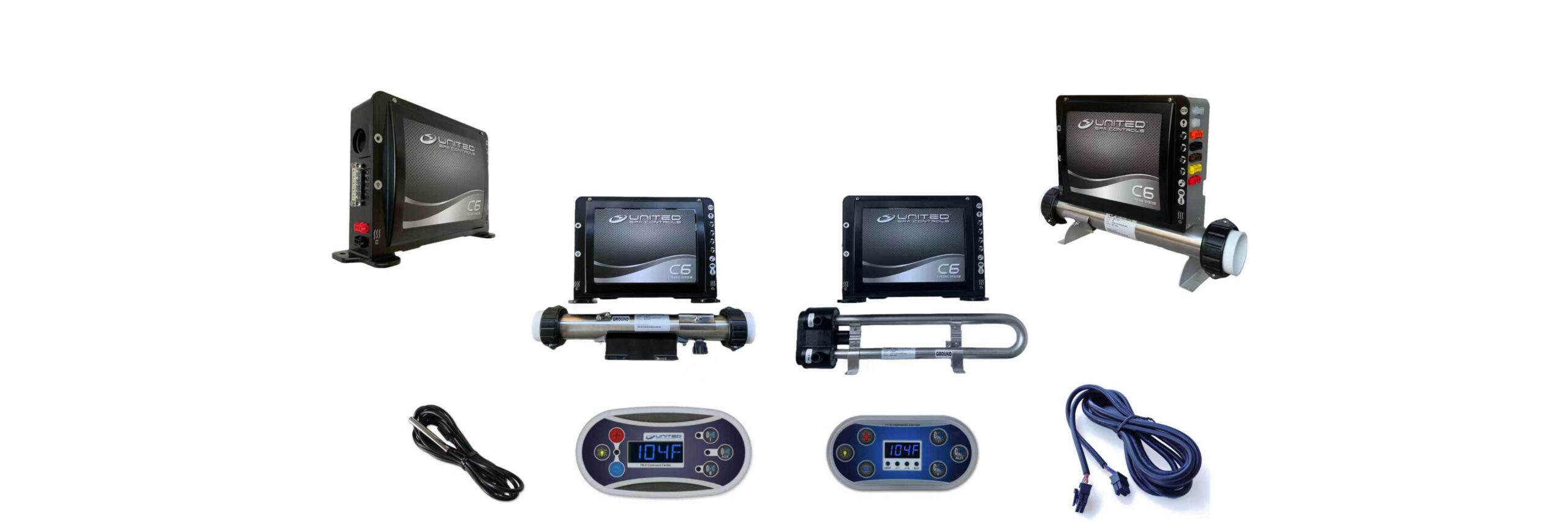
A complete spa control system includes the control box, heater element, topside panel, and connecting cables.
Why Your Spa Heater Won’t Turn On (Or Stay On)
A spa heater will only activate when three conditions are simultaneously met:
-
Adequate water flow is detected through the heater manifold
-
All sensors (pressure switch or flow sensor) return valid readings
-
The control board authorizes heater activation
If any condition fails, the system shuts the heater down automatically — this is a built-in safety mechanism, not a malfunction.
This is where understanding how spa control systems manage heating logic becomes critical.
The challenge is identifying which condition is failing.
The 5 Most Common Causes
1. Insufficient Water Flow
Low flow is the single most common reason a spa heater won’t heat. The system requires a minimum flow rate before it will allow the heater to activate.
Common causes include:
-
Clogged or overdue-for-cleaning filter cartridges
-
Air pockets trapped in the plumbing
-
Closed or partially closed isolation valves
-
A circulation pump that is weakening or failing
Even when jets appear to be running, flow through the heater manifold may still be too low to satisfy the flow sensor.
If your topside panel is showing FLO or FL error codes, water flow is almost certainly the issue. See our full:Spa Control System Error Code Guide
2. Pressure Switch or Flow Sensor Failure
The pressure switch or flow sensor is what tells the control board that water is actually moving.
If this component:
-
Fails
-
Becomes misaligned
-
Sends incorrect or unstable signals
The system will block heater activation — even if the pump appears to be working normally.
This is a common source of confusion: the spa feels like it’s running normally, but the heater won’t come on. A failed flow sensor is often mistaken for a failed heater.
3. Heater Element Failure
The heater element itself can fail, though this is less common than flow or sensor issues.
Signs include:
-
No continuity measured across heater terminals
-
Visible scale or mineral buildup inside the heater tube
-
Burned or corroded electrical connections
Before replacing the element, verify that the control system is actually delivering power to the heater.
If no voltage is present at the heater terminals, replacing the element won’t solve anything.
4. Incorrect Voltage or Electrical Configuration
Voltage mismatch is a frequently overlooked cause, particularly in portable hot tubs.
-
120V systems have significantly limited heating capacity and may heat very slowly or struggle to maintain temperature
-
240V systems require correct breaker sizing and wiring configuration; incorrect setup can cause the heater to trip off under load
If your spa heats slowly or the breaker trips during heating cycles, voltage configuration is worth investigating.
See our guide:120V vs. 240V Spa Control Systems
5. Spa Control System Failure
When flow, sensors, and the heater element all check out, the control board is the next suspect.
The control system manages every aspect of heater operation:
-
Activation logic
-
Safety interlocks
-
Sensor validation
-
Power distribution
Properly designed systems — such as United Spa Controls spa control systems
ensure stable heater activation, accurate sensor validation, and long-term system reliability.
A board fault can prevent the heater from ever receiving power, regardless of the heater’s condition.
Control system failure is often misdiagnosed because individual components — pump, heater, sensors — appear to test fine in isolation.
Step-by-Step Diagnostic Process
Work through these steps in order before replacing any components.
Step 1: Restore Water Flow
-
Clean or replace the filter cartridge
-
Confirm all valves are fully open
-
Check that jet pressure is strong and consistent
-
Prime the pump if air is suspected in the lines
Step 2: Perform a Full System Reset
-
Turn off the breaker
-
Wait 5–10 minutes
-
Restore power
A reset clears temporary faults and allows sensors to re-initialize.
Step 3: Read the Error Codes
|
Code |
Meaning |
|---|---|
|
FLO / FL |
Flow insufficient — check filter, valves, and pump |
|
HL |
High limit triggered — possible overheating or blocked flow |
|
DR |
Dry condition — heater activated without adequate water |
For full explanations:Spa Control System Error Code Guide
Step 4: Measure Voltage at the Heater
With the system calling for heat:
-
Use a multimeter
-
Check voltage at heater terminals
Results:
-
Voltage present → heater likely failed
-
No voltage → control system or safety lockout issue
When to Replace the Control System
If you have worked through the diagnostic steps above and the problem keeps recurring — intermittent heating, repeated error codes, frequent system resets, or unstable electrical behavior — the control board is almost certainly the root cause.
Replacing individual components on a failing control system rarely resolves the problem long-term.
A matched replacement system restores:
-
Stable sensor communication
-
Proper safety logic
-
Reliable heater activation
You can review compatible options here:United Spa Controls spa control systems
Preventing Heater Problems
The most effective ways to avoid future heating failures:
-
Clean your filter every 4–6 weeks
-
Maintain proper water chemistry
-
Verify voltage compatibility before installing new components
-
Use matched control systems and heaters
For a full compatibility checklist:Choosing the Right Spa Control System
Summary:Spa Heater Not Heating — Top Causes
A spa heater that won’t heat is rarely just a heater problem.
In order of likelihood, the cause is:
-
Insufficient water flow
-
Pressure switch or flow sensor failure
-
Incorrect voltage or electrical configuration
-
Heater element failure
-
Spa control system failure
Follow the diagnostic steps before replacing parts.
If the problem recurs after component replacement, the issue is usually the control system — not individual components.
In many cases, upgrading to a properly matched system is the most reliable and cost-effective long-term solution.
You can explore compatible systems here:United Spa Controls spa control systems
For general hot tub maintenance advice, the Pool & Hot Tub Alliance is a trusted industry resource.
If you are unsure which United Spa Controls system fits your spa, the United Spa Controls Brand Overview covers all models and compatibility requirements.